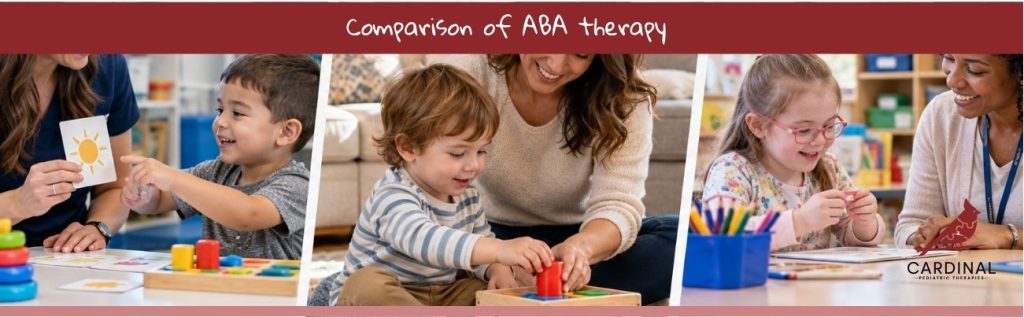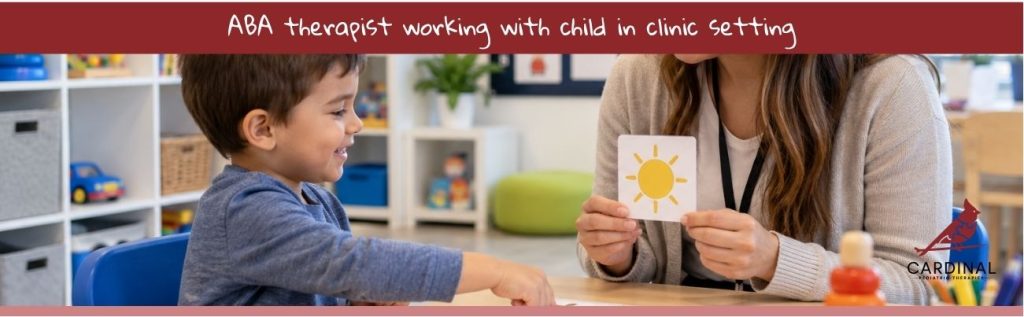

How Many Hours Of ABA Therapy Per Week For Your Child

Parents ask how many hours of ABA therapy per week because time affects school, work, siblings, and routines. In this article, Alice Okamoto, MA, BCBA, LBA, Chief of Staff at Cardinal Pediatric Therapies, explains how clinicians think about recommendations, what a strong plan includes, and what progress can look like in the first 30 to 90 days.

Her perspective reflects how Cardinal builds ABA therapy services around individualized goals, measurable data, and realistic expectations so families understand what the hours are designed to accomplish.

ABA Therapy Services And Why Weekly Hours Vary

ABA therapy services are designed to teach skills that improve daily functioning and reduce behaviors that interfere with safety or learning. Alice explains it in plain language, “ABA therapy teaches children new skills to be as independent and fulfilled as possible.” That is why how many hours of ABA therapy per week does not have one universal answer. 

The recommended hours connect to the child’s current needs, the goals that matter most to the family, and how much repetition the child needs for skills to become reliable across real settings.

  • Goals can span communication, play, classroom readiness, daily living, and social skills
  • Safety needs can increase intensity early, such as self-injury, aggression, or elopement
  • Learning pace and tolerance for demands can influence how much practice helps most

Intake And Assessment Come Before A True Hours Recommendation

Families often want a schedule first, but clinicians usually need assessment data to recommend hours responsibly. Alice describes starting with an intake paperwork packet that collects educational, medical, and family background, along with insurance and diagnosis information. 

After insurance authorization for an initial assessment, the team schedules the assessment. Then the written treatment plan, including goals, gets completed after the assessment, and scheduling gets determined across the full process based on family availability and the medical recommendation for treatment hours.

  • Intake helps the team understand safety needs, priorities, routines, and current skills
  • Assessment informs goals, teaching approach, and recommended intensity
  • Scheduling should reflect both clinical need and real-world family constraints
types of aba therapy gilbert az

Types Of ABA Therapy Can Change How Hours Feel In A Week

A common misconception is that ABA therapy means sitting at a table all day. Alice explains that some goals may require table work when the task requires it, but “a lot of therapy is more naturalistic,” meaning skills can be taught through play and across different environments.

This matters when families think about how many hours of ABA therapy per week, because the format and setting can make the schedule feel more workable and more relevant to daily life.

  • Naturalistic teaching can target skills during play and routines
  • Structured teaching can support focused learning targets when needed
  • Community-based practice can help with transitions, safety, and generalization
  • Parent collaboration can strengthen carryover outside sessions

What A Strong Treatment Plan Includes And How Often It Updates

Families often focus on hours, but plan quality is what makes the hours useful. Alice says “a treatment plan should include individualized goals for each child, covering a range of domains,” and goals should be “socially significant,” meaning they matter to the child and their family.

She also explains that plans are updated on an ongoing basis as data is analyzed, and formal updates are typically required for insurance approval every six months.

  • Goals should map to daily life, not only clinic-only tasks
  • Domains should be well-rounded, such as communication plus daily living
  • Data should guide changes, not guesswork or routine-only updates
  • Updates should happen when the child’s data shows a need to adjust

Realistic Progress In The First 30 To 90 Days

Parents want to see progress quickly, but Alice sets realistic expectations for early therapy. “Within the first 30 days, we emphasize what we call pairing.” She describes pairing as building “a safe and trusting relationship for the child with their therapist,” and she notes that it remains essential throughout therapy, especially at the beginning.

She also normalizes that the first weeks may not feel easy or show big goal gains because the child is warming up to the therapist and to therapy. By 60 to 90 days, she likes to see children starting to respond more to instruction, use communication in new ways, and tolerate tasks that used to be challenging.

  • Early wins can look like easier transitions and a greater willingness to engage
  • Communication growth may start small, such as new attempts or more consistent requesting
  • Tolerance can improve first, such as brief demands without escalation
  • Instruction-following may increase as trust and structure become familiar
how many hours of aba therapy per week cary nc

How Clinicians Individualize Therapy Across Ages And Support Needs

Age matters, but it does not decide everything. Alice explains that ABA goals are designed around each child’s ability to “communicate and function within their daily life,” meaning right now. She adds that individualization depends on current support requirements, family priorities, and developmental level.

Clinicians weigh age-appropriate norms with what the child can do today, and she emphasizes it is “critical to meet children where they are now and grow skills from there,” rather than expecting a child to perform at a level that may be more age-typical but not yet accessible.

  • A younger child may need intensive focus on functional communication and play foundations
  • An older child may need targeted support for independence, self-advocacy, and school routines
  • Family priorities shape goal selection and what success looks like at home
  • Support needs drive how much repetition and consistency helps skills stick

What Parents Should Ask About BCBA Supervision And Staffing

When parents compare providers, supervision and staffing questions reveal how the program stays responsive and ethical.

Alice recommends that parents ask about the pairing process with their child’s therapist, how program modifications are made, and how the BCBA determines when adjustments are needed. She also highlights parent collaboration and parent training as a key part of successful services.

  • Who supervises the case and how often they observe sessions
  • How the team decides what is working and what needs to change
  • How parent training works and how it connects to home routines
  • How communication stays consistent across technicians, supervisors, and caregivers
how many hours of aba therapy per week phoenix az

Misconceptions About ABA That Cause Confusion Or Delays

Misconceptions can delay care and make families hesitate about recommended hours. Alice names common myths, ABA is all about compliance, ABA means sitting at a table all day, or ABA is only for “really bad kids.” She says these misconceptions are harmful, causing confusion and delays.

She also clarifies that “ABA is not all about compliance,” and that teaching children to say no and advocate for themselves supports communication and independence.

  • ABA therapy for autism can include play-based and naturalistic teaching, not only table work
  • Independence includes self-advocacy and communication, not blind compliance
  • Behavior reduction is one part, skill building opens doors across settings
  • Understanding what ABA is can make the conversation more practical

Making The Schedule Make Sense For Your Family

How many hours of ABA therapy per week should reflect what your child needs to learn, what your family needs support with, and what the assessment shows about priorities. Alice Okamoto’s guidance highlights a clinician mindset centered on individualized goals, meaningful progress, and data-based adjustments rather than on a fixed weekly number. 

When families understand pairing, plan updates, and the role of BCBA supervision, the hours recommendation becomes easier to interpret as a medical and developmental support plan rather than just a calendar commitment. For families considering ABA therapy services, Cardinal Pediatric Therapies offers structured pathways across settings that keep goals practical and measurable.

In Clinic ABA Therapy For Your Child

Parents often ask what in clinic ABA therapy looks like day to day, especially if their child has struggled with routines, transitions, or learning in busy environments. Alice Okamoto, MA, BCBA, LBA, Chief of Staff at Cardinal Pediatric Therapies, explains how clinic-based services work in plain language, how teams build trust first, and how progress gets tracked in a way families can understand.

Her perspective highlights why a structured clinic setting can support communication, daily living skills, and safer behavior while helping children generalize skills into home and school life.

Who Tends To Benefit From Clinic Based ABA Therapy

In the clinic, ABA therapy can be a strong fit when a child needs predictable structure and frequent learning opportunities across the week.

Alice describes ABA therapy services as skill-building: “ABA therapy teaches children new skills to be as independent and fulfilled as possible.” In a clinic setting, the team can build those skills with consistent routines and carefully planned teaching opportunities.

Clinic-based ABA therapy often helps when a child needs support with

  • Transitions between activities, waiting, and following simple routines
  • Communication that replaces unsafe or disruptive behavior
  • Learning readiness, such as responding to instruction and staying engaged
  • Play and social skills that need repeated practice with guidance
in clinic aba therapy phoenix az

What A Typical In Clinic Session Looks Like For A Family

Families want a concrete picture of what happens inside ABA clinics. While every plan is individualized, the structure tends to follow a consistent rhythm so children can predict what comes next.

Alice explains that ABA goals often target reducing behaviors that are “socially inappropriate or unsafe” while teaching skills like “communication, play, classroom readiness, daily living, social, etc.” In clinic, those domains can show up in multiple short learning moments across a session, rather than one long block of the same activity.

A typical clinic-based ABA therapy session may include

  • Pairing time to build trust and comfort with the therapist
  • Play-based teaching that targets communication and social engagement
  • Short, structured practice for skills that need repetition and focus
  • Transition routines that teach flexibility, waiting, and following schedules
  • Breaks that support regulation and sensory needs

How The Clinic Environment Supports Routines And Transitions

Many children struggle less when the environment stays consistent. In clinic, ABA therapy uses routines to reduce uncertainty and help children practice the same skills repeatedly until they become more reliable. Alice also addresses a common misconception: ABA does not mean sitting at a table all day. She notes that some goals may use a table when a task requires it, but “a lot of therapy is more naturalistic,” meaning skills can be taught through play and in different settings.

A clinic setting can support routines and transitions by offering

  • Predictable schedules that reduce friction between activities
  • Clear visual and environmental cues that help children understand expectations
  • Consistent opportunities to practice transitions with coaching, not punishment
  • Structured environments that reduce distractions when a child needs focus

Many families notice that routines practiced in the clinic can become templates for home. That carryover works best when the team keeps parent communication clear and uses consistent language across settings.

How Teams Handle Sensory Needs in the Clinic

Parents often worry that ABA clinics will ignore sensory needs or push children through distress. A strong clinic program plans for sensory supports as part of the environment and the session flow, not as an afterthought. Alice emphasizes meeting children where they are and building skills from there, calling it “critical to meet children where they are now and grow skills from there,” rather than expecting them to perform at a level that might be age-typical but not yet realistic.

In clinic, ABA therapy can support sensory needs through

  • Choice of seating or activity locations, such as table time, floor play, beanbags
  • Built-in regulation breaks, movement opportunities, and pacing adjustments
  • Task modification when demands exceed tolerance in the moment
  • Teaching communication to request breaks or help, instead of escalating behavior
center based aba therapy phoenix arizona

How We Communicate Progress Simply And Clearly

Progress should feel understandable, not hidden behind jargon. Alice explains what data-driven means for families, behavior analysts make decisions “based on the child-specific data that is taken on a daily basis.” She adds that questions like what is working, what is not working, and what can be changed are guided by frequent analysis of data taken each session.

Clinic-based ABA therapy teams often keep progress communication clear by focusing on

  • Simple language tied to real-life outcomes, not only technical targets
  • Regular updates that connect goals to what families see at home
  • Data trends that show whether a strategy helps, not just whether it was tried
  • Plan changes when the data shows a plateau, not months later

For families who want background on clinician credentials, the Behavior Analyst Certification Board explains BCBA roles and certification here.

What Outcomes Families Often Notice First

Families often hope for immediate goal mastery. Alice sets a more realistic expectation, “Within the first 30 days, we emphasize what we call pairing.” She describes pairing as building “a safe and trusting relationship for the child with their therapist,” and she notes the early weeks may not feel easy: “We don’t usually expect the first several weeks to be easy or necessarily show lots of progress with goals,” because children are still warming up to therapy.

By 60 to 90 days, Alice likes to see children “starting to respond more to instruction,” using communication in new ways, and tolerating tasks that used to be challenging.

Early outcomes families often notice in clinic ABA therapy include

  • Easier drop-offs and smoother transitions into the clinic routine
  • More engagement with therapists and activities, less avoidance
  • New communication attempts that replace unsafe behavior
  • Better tolerance for short demands, waiting, and switching tasks
aba clinics wilmington nc

Helping Clinic Skills Generalize To Home And School

Parents often ask if clinic skills will transfer. Generalization improves when goals match daily life, when caregivers understand the plan, and when teams coordinate across services. Alice notes that during intake, teams ask whether a child receives related services like speech or OT, then use release forms to coordinate so services stay aligned.

Clinic to home and school generalization often improves when

  • Goals target functional routines, such as communication, transitions, self-help skills
  • Parent training supports consistent responses outside the clinic
  • Teams collaborate with related providers when families approve information sharing
  • Programs teach skills across different activities, not only one setup

Bringing It Back To Daily Life

In clinic, ABA therapy works best when the clinic structure supports trust, predictable routines, and repeated practice of meaningful skills. Alice Okamoto’s guidance highlights what many families need to hear early: that pairing comes first, progress grows with time and consistency, and clinicians adjust treatment based on daily data. 

When clinic-based ABA therapy targets communication, safety, and daily functioning, families often see changes that matter at home and support readiness for learning in school, with Cardinal Pediatric Therapies keeping goals individualized and progress measurable.

ABA Therapy Benefits: What Changes First at Home, School, and Community

struggle. When researching ABA therapy benefits, families want to know what changes they can expect and how soon they will feel them at home, school, and in the community.

At Cardinal Pediatric Therapies, the focus is on practical outcomes.

As Alice Okamoto, BCBA explains: “ABA therapy teaches children new skills to be as independent and fulfilled as possible.”

These benefits start small, building into bigger skill gains over time. The earliest benefits often include more trust, better communication, and fewer daily battles.

ABA Therapy Benefits in the First 30 to 90 Days

Families sometimes expect immediate change. A better expectation is early stability, then early skill movement.

Alice shares that “within the first 30 days, we emphasize what we call pairing. Pairing is building a safe and trusting relationship for the child with their therapist.”

That relationship matters because many children will not learn effectively until they feel safe, understood, and motivated.

She also sets expectations clearly: “We don’t usually expect the first several weeks to be easy or necessarily show lots of progress with goals, and that’s okay.”

In other words, early progress can look like willingness to enter sessions, tolerate transitions, or accept guidance without escalating.

By 60 to 90 days, she explains that teams typically look for signs that children are “starting to respond more to instruction,” “start using communication in ways that they hadn’t before,” and “start tolerating tasks” that were challenging in the past.

What “Progress” May Look Like Across Settings

  • Home: smoother routines, fewer unsafe moments, better transitions
  • School: improved readiness skills, such as responding to directions or tolerating group expectations
  • Community: shorter recovery time after frustration, more flexible participation in errands or activities
ABA therapy benefits Phoenix

ABA Therapy Services and Early Changes

Many ABA therapy services start by reducing the things that block learning: unsafe behaviors, intense frustration, and the inability to communicate needs.

Alice describes common goals as focusing on “decreasing challenging behaviors that are socially inappropriate or unsafe” while teaching skills like “communication, play, classroom readiness, daily living, social.”

That balance is important. The benefits are not only about reducing a behavior. They are about what replaces it.

How Skills Are Chosen First in ABA Therapy

Parents often ask which goals come first, and why.

Alice is direct about the priority: “We always want to assess and start with skills that replace harmful behaviors, whether that be self-injury, aggression, elopement, etc.”

She adds that communication is a core early focus because “teaching children to effectively communicate what they want and need will often reduce or eliminate the challenging behaviors” that have worked in the past.

She gives a clear example that helps parents understand the “why” behind goals. If a child has learned that self-hitting results in attention, the behavior may continue because it reliably produces attention. Once the team understands the reason the behavior continues, the plan can teach a safer way to ask for attention that still works.

Early goals often fall into two categories

  • Safety and regulation skills that reduce risk and help a child stay engaged
  • Functional communication that helps a child get needs met without escalation

Those early choices are one reason families may notice ABA therapy benefits first at home, where frustration and needs happen most often.

Data-driven ABA Therapy for Families

“Data-driven” can sound technical. For families, it should mean the team is not guessing and not relying on vague impressions.

Alice explains that “decisions are made based on the child-specific data that is taken on a daily basis,” and that answers to questions like “what is working, what’s not working, what can be changed” are guided through frequent analysis of that data.

So what does that mean in practice?

  • Goals are defined in observable terms
  • Progress is tracked session by session
  • The plan is adjusted when data shows a skill is stalled or a strategy is not helping
  • Families get clearer updates about what is improving and what still needs support

For parents who want a reliable, plain-language overview of autism interventions, the CDC’s page on treatment and intervention services is a helpful starting point.

ABA therapy progress Arizona

ABA Therapy for Autism Across Home, School, and Community

For many families, ABA therapy for autism is about helping a child function with less stress across everyday environments. The same skill can look different in each setting, which is why generalization matters.

  • At home, the benefits often show up in routines like getting ready, mealtimes, or sibling play.
  • At school, benefits often show up in learning readiness and flexibility.
  • In the community, benefits often show up in safety and participation, like tolerating waiting, leaving a preferred place, or handling unexpected changes.

Alice emphasizes that goals should reflect what a child needs to function now: “ABA goals are designed based on each child and their needs to communicate and function within their daily life, so that means right now.”

If you are evaluating providers, that sentence is a useful filter. A good plan targets the situations that matter in your real week, not an abstract checklist.

Types of ABA Therapy and What Families May Notice First

Parents search for types of ABA therapy because they want to understand what sessions will look like. Some goals require structure, others are best taught naturally through play and daily routines.

Alice addresses a common misconception directly: “Some ABA goals do require sitting at a table if we’re working on a task that requires a table… but a lot of therapy is more naturalistic.” In other words, the type of teaching should match the goal and the child.

Different approaches can support different benefits, such as:

  • Structured teaching for early learning skills that require repetition
  • Naturalistic teaching for communication, play, and flexible behavior in real situations
  • Routine-based teaching for home and community life

For an additional evidence-based reference, the NICHD overview of behavioral management therapy and related approaches provides useful context.

ABA therapy progress NC

How ABA Therapy Is Individualized 

One reason ABA therapy benefits vary by child is that effective programs individualize goals.

Alice explains that age matters, but it is not the only lens:

“So age does matter, but looking at current support requirements, family priorities, and developmental level are crucial to individualizing appropriate goals.”

She adds a principle that many families find reassuring: “It’s critical to meet children where they are now and grow skills from there.” That approach avoids unrealistic expectations and helps the child experience success sooner.

What Individualization Should Include

  • Family priorities that reflect daily stress points and quality of life goals
  • Developmental level and current communication abilities
  • Safety needs and the function of challenging behavior
  • The environments where the child needs skills to show up most

Coordinating with School, Speech, and OT 

Families often worry that therapies will feel disconnected. Coordination helps reduce that risk and can speed up progress when goals overlap.

Alice explains that during intake, teams ask whether a child receives related services “such as speech and OT,” and then request releases so they can coordinate with those providers.

She notes that collaboration supports “a well-rounded and effective treatment experience across all the therapies” and helps ensure services are aligned.

This matters because many goals, such as functional communication or classroom participation, can be reinforced across disciplines when everyone is working toward aligned outcomes.

The Enduring Impact of ABA Therapy

To ensure ABA therapy leads to lasting, real-life change, a focus on generalization is crucial. Programs must be designed to prioritize goals that reduce risk and daily stress first. Effective therapy requires teaching replacement skills for challenging behaviors and coordinating data review with families regularly. 

Furthermore, practicing skills consistently across home, school, and community environments is essential, alongside coordination with related services like speech and OT when goals overlap. When ABA is individualized, measurable, and well-coordinated, the resulting benefits improve communication, reduce distress in routines, and increase independence.

Parent Support Autism Coach: How Group Family Coaching Helps Families Build Real Progress

A parent support autism coach helps caregivers turn day-to-day challenges into teachable moments. That support matters because progress rarely happens only during therapy sessions. It happens at breakfast, in the car, during transitions, and at bedtime. Group Family Coaching gives families a structured space to learn practical tools, share what works, and build consistency across routines.

At Cardinal Pediatric Therapies, caregiver support often shows up through parent coaching and family-centered ABA services. Group Family Coaching can complement that approach by helping parents and caregivers practice strategies that fit real life, not perfect schedules.

What a Parent Support Autism Coach does in a group setting

In Group Family Coaching, a Parent Support Autism Coach guides a small group of caregivers through goal setting, problem-solving, and skill practice. The coach keeps sessions structured, respectful, and practical. Caregivers also learn from each other’s experiences.

You may hear similar terms used for this kind of support:

  • Autism parent coaching
  • Caregiver coaching for autism
  • Family coaching for autism
  • Group parent training
  • Caregiver support group

These labels vary, but the best groups share the same core features. They teach usable strategies, practice them, and track progress.

caregiver support for autism

Why group coaching can feel different than one-on-one support

One-on-one coaching can be very effective. Group coaching adds something unique, shared context. When you hear how another family solved a similar challenge, the strategy can feel more doable. It can also help caregivers stop blaming themselves for struggles that many families share.

Group coaching often helps because it includes:

  • Normalization of common stress points
  • More examples of what strategies look like at home
  • Accountability from peers, not pressure
  • A wider set of ideas to adapt to your child

A group does not replace individualized care when a child needs it. It can strengthen daily routines that support that care.

What kids gain when caregivers gain skills

A Parent Support Autism Coach works with caregivers because kids benefit from consistent responses. Many children with autism do best when routines stay predictable and adults use similar language and expectations.

The CDC notes that behavioral approaches have strong evidence for supporting autism-related needs, including approaches like ABA that focus on building skills and reducing barriers to learning.

This reinforces why caregiver consistency matters in everyday settings: behavioral strategies work best when they show up in daily life, not just during sessions. The CDC overview on autism treatment explains this in plain language in its discussion of behavioral approaches and ABA. 

Core skills a Parent Support Autism Coach often teaches

A strong coaching group stays practical. The goal is repeatable strategies, not theory.

Communication supports that reduce frustration

Communication challenges can increase stress for kids and caregivers. Coaching groups often focus on supporting real-time communication, even when a child has limited speech.

Caregivers may practice:

  • Offering clear choices instead of open-ended questions
  • Modeling short phrases that match the situation
  • Reinforcing any attempt to communicate
  • Using visuals for routines and transitions

If a family explores AAC, it helps to have a clear definition. ASHA explains AAC as ways people communicate besides talking, including no-tech and device-based options. 

autism parent coaching group

Behavior supports that focus on teaching, not reacting

Group coaching often reframes “behavior problems” as skill gaps or unmet needs. A Parent Support Autism Coach helps caregivers shift from reacting in the moment to preventing patterns and teaching alternatives.

Common group goals include:

  • Smoother transitions between activities
  • Building tolerance for waiting
  • Teaching a replacement skill for unsafe behavior
  • Reducing power struggles around routines

This approach aligns well with home-based reinforcement and consistent follow-through.

Routines that lower stress for the whole household

Routines can reduce uncertainty, which can reduce dysregulation for many kids. Coaching groups often focus on one routine at a time so the plan stays realistic.

Many families start with:

  • Morning flow
  • Mealtime structure
  • After-school decompression
  • Bedtime steps
  • Leaving the house

A Parent Support Autism Coach often helps caregivers build a “minimum viable routine” first. It should work on busy days too.

How goals and progress tracking work in Group Family Coaching

Caregivers often feel overwhelmed by big goals. Group coaching helps families narrow focus and measure progress in a simple way.

A common structure looks like this:

  • Choose one routine that happens most days.
  • Define one target skill in plain language.
  • Pick one strategy you can repeat without extra prep.
  • Track one measure for two weeks.
  • Review results and adjust the plan.

How Group Family Coaching fits with ABA services

Many families use group coaching alongside ABA therapy. ABA tends to provide individualized skill targets and behavior supports. Group coaching helps caregivers carry those supports into real routines.

Cardinal Pediatric Therapies describes caregiver support as part of its ABA services, which can help families understand how parent coaching and family involvement fit into a broader plan of care.

Group coaching often helps with:

  • Generalization across home, school, and community
  • Consistent reinforcement and prompting across caregivers
  • Alignment between what staff teach and what parents reinforce
  • More caregiver confidence during hard moments

What to look for in a quality Parent Support Autism Coach group

Not all groups run the same way. A strong group stays structured and respectful. It should also support different family needs without turning into unstructured venting.

Look for:

  • Clear session topics and defined goals
  • Practice, modeling, and feedback
  • Realistic home practice plans
  • Respectful discussion rules
  • A simple way to measure progress

If a group includes caregiver coaching tied to ABA principles, it can help to understand how ABA formats differ. Cardinal’s resource on the different types of ABA therapy provides context without overwhelming detail.

Questions caregivers can ask before joining a group

You do not need clinical vocabulary to evaluate fit. A few direct questions can reveal whether the group is structured and practical.

Consider asking:

  • How do families set goals and track progress?
  • Do caregivers practice strategies during sessions?
  • How do you support different ages and support needs?
  • What does “home practice” look like between sessions?
  • How do you keep sessions supportive and focused?

Clear answers usually signal clear leadership.

Emotional support matters, but structure matters too

Raising a child with autism can be emotionally demanding. Group coaching can provide validation and empathy. Still, many caregivers also want practical tools. The best groups do both.

A Parent Support Autism Coach helps families:

  • Name the problem in a neutral, solvable way
  • Choose one change that can happen this week
  • Troubleshoot barriers without judgment
  • Celebrate small wins that build momentum

Parent Support Autism Coach support that builds confidence over time

A Parent Support Autism Coach does not aim to “fix” a child. The focus stays on building skills, reducing stressors, and creating predictable routines that support growth. Group Family Coaching can help caregivers feel less alone while they build strategies they can actually use.

When caregivers share a plan, kids often see clearer expectations and calmer routines. That consistency can make skill-building more efficient and daily life more manageable. A Parent Support Autism Coach helps families take the next step that fits their real routine, then builds from there.

Communication Skills With Autism: Practical ABA Strategies for Everyday Connection

Communication skills with autism can grow in many forms, from gestures to speech to AAC. At Cardinal Pediatric Therapies, we support families as they build clear, functional ways for a child to share needs, ideas, and feelings.

This guide explains why autism communication skills can look different from child to child, how ABA teaches communication step by step, and what you can practice during meals, play, and outings.

Why communication skills with autism look different for every child

Autism can affect how a child understands language, uses language, and shares attention with others. Two children can have the same diagnosis and communicate in very different ways. One child may speak in long sentences but struggle with conversation. Another may use a few words, scripts, or sounds. Another may rely on nonverbal communication autism, like pointing or leading an adult to an item.

Some common patterns include:

  • Uneven skills: strong labeling, limited requesting, or the reverse
  • Different social timing: fewer bids to share attention or show interests
  • Sensory and motor factors: speech can feel harder when the body feels stressed
  • Language delays in autism: slower vocabulary growth or difficulty combining words

The National Institute on Deafness and Other Communication Disorders describes how children with ASD may have difficulty developing language and also communicating nonverbally through gestures, eye contact, and facial expressions.

Communication is more than talking

When people think about communication therapy for autism, they often picture speech only. Communication includes any reliable way to send a message and receive a response. That can mean words, but it can also mean gestures, signs, pictures, or devices.

Communication can include:

  • Gestures like pointing, nodding, or reaching
  • Facial expressions and body orientation
  • Signs or simple hand cues
  • Picture choice boards or visual icons
  • Speech-generating devices or apps
  • Spoken words, phrases, and sentences
autism communication skills

AAC often supports children who are non-speaking, minimally speaking, or inconsistent with speech. AAC can also help a child who speaks but struggles in busy settings. ASHA explains AAC as “all of the ways that someone communicates besides talking,” including low-tech and high-tech options.

What ABA targets when building autism communication skills

ABA does not treat communication like a single milestone. It breaks skills into small steps that match the child’s current abilities. It also focuses on function. A child needs a way to get help, request a break, and share interests, even before speech becomes consistent.

Many ABA communication goals fall into a few practical categories.

1) Requesting what a child wants or needs

Requesting often reduces frustration fast. It gives a child control in appropriate ways.

Common early targets:

  • “More,” “help,” “open,” “break,” “all done”
  • Choosing between two items with pictures
  • Pointing to a preferred item
  • Handing over a card for a preferred snack

2) Responding and understanding

Communication includes listening and comprehension, not only speaking.

Targets may include:

  • Following one-step directions
  • Responding to their name
  • Matching pictures to items
  • Answering simple “what” or “where” questions

3) Commenting and sharing attention

Commenting supports social communication autism. It helps a child connect without always “asking.”

Targets may include:

  • “Look” with a point or a device button
  • Showing an item and waiting for a response
  • Short phrases like “I see it” or “funny”

4) Conversation foundations

Conversation starts with simple turns. It grows from there.

Targets may include:

  • Taking turns during play
  • Asking for a turn
  • Staying with a shared activity for longer
  • Practicing simple questions and answers
improving communication in autistic children

How ABA teaches communication in clear, family-centered steps

Parents deserve a plan they can picture. ABA teaching usually follows a straightforward loop that repeats across goals.

Step 1: Start with a baseline.
The team watches what happens during play, tasks, and transitions. They note what the child does to communicate now.

Step 2: Pick goals that matter at home and school.
Goals should help daily life. They should fit the child’s motivation and routines.

Step 3: Teach with support, then fade help.
A therapist may model a word, point to a picture, or prompt a gesture. Then they reduce prompts over time.

Step 4: Practice across routines.
Skills should show up at the table, on the playground, and during errands, not only in one room.

Step 5: Adjust based on progress.
When a strategy works, the team builds on it. When it stalls, the team changes the approach.

This process supports improving communication in autistic children without relying on guessing or “hoping it clicks.”

Real-life examples of communication targets in daily routines

Practice works best when it feels natural. Below are examples you can picture at home.

Meals and snacks

Use short, repeated chances to communicate.

  • Offer two choices and pause
  • Wait for a point, picture, or word
  • Model the message once, then let the child try

Targets might include “more,” “drink,” “open,” or “all done.”

Playtime

Play offers many chances for communication that feels fun.

  • Requesting a turn with a toy
  • Asking for help with a puzzle
  • Commenting “go” during cars or slides
  • Sharing interest by showing an item

Outings and errands

Outings create “real world” reasons to communicate.

  • Asking for a break
  • Asking to leave a loud space
  • Choosing a snack at a store
  • Requesting a preferred activity at the park

These targets connect closely to communication skills with autism because they support independence.

Visual supports and nonverbal communication autism

Some children understand more than they can express. Visual supports can help a child communicate choices and handle transitions. They also reduce pressure when speech feels hard.

Vanderbilt Kennedy Center’s visual supports brochure explains how visual tools can help caregivers communicate more effectively with a child and support understanding and expression.

Simple visuals that often help:

  • A first-then board for transitions
  • A two-choice board for snacks and toys
  • A “break” card for overwhelming moments
  • Picture labels on bins for clean-up

How Cardinal weaves communication into in-clinic ABA therapy

A clinic setting can make practice easier. It offers structure, predictable routines, and planned opportunities for peer interaction. Cardinal uses comprehensive assessments to tailor interventions and updates goals as progress evolves. Communication goals can show up throughout the session, not only during direct instruction.

Cardinal’s in-clinic ABA therapy model supports communication through everyday activities like play stations, group routines, and transitions. That structure helps children practice asking for help, joining activities, and following directions.

Communication also overlaps with social learning. Many children benefit from direct practice with conversation, turn-taking, and group participation. Cardinal’s social skills training supports social communication autism goals in a setting built for peer practice.

For families exploring AAC as part of a plan, Cardinal’s augmentative communication for autism resource explains how alternative communication tools can support connection and daily life.

nonverbal communication autism

A simple, realistic home plan for this week

You do not need long sessions. You need repeatable moments.

Try this for seven days:

  • Pick one goal: “help” or “break” works well
  • Create five quick chances each day
  • Reinforce attempts, not perfection
  • Keep your language simple and consistent

If your child points, honor it. If your child uses a picture, honor it. If your child tries a sound, honor it. Those attempts build momentum.

When communication starts to click

Communication skills with autism grow best when goals match the child, not a checklist. Some children move from gestures to words. Others use AAC long-term.

Many use a mix. Progress often looks like more attempts, clearer requests, and smoother transitions. When families and therapists share the same plan, communication becomes easier to practice and easier to keep.

How to Improve Expressive Language in Autism With ABA Based Strategies That Fit Real Life

If you are searching for how to improve expressive language in autism, you are probably living the hard parts. Your child may understand more than they can say. They may point, pull you by the hand, repeat phrases, or get upset when words do not come out the way they want. 

At Cardinal Pediatric Therapies, we treat expressive language as a skill set you can build in small, steady steps across play, routines, and social moments. Autism is a developmental disability that can affect communication and behavior, which is one reason language growth may look different and take more time. 

What expressive language in autism means

Expressive language in autism is how a child shares wants, needs, ideas, feelings, and information. It can include:

  • Gestures (pointing, waving, nodding)
  • Sounds or vocalizations
  • Pictures or icons
  • Sign language
  • Single words, short phrases, or full sentences
  • Devices that speak when a child selects words or symbols

If your child has an expressive language delay autism teams often look at two big questions: What can they express today, and what support helps them do it more easily in more places?

building expressive language skills

A hopeful mindset: small steps count

Progress in language development in autism often appears slow until it suddenly becomes apparent. That is normal. A child might first learn to request, then in more rooms, then with more people, then with different words. Each step matters because it reduces frustration and increases connection.

Here are signs of meaningful progress that people miss:

  • Your child communicates faster, even without words
  • They start a message more often instead of waiting
  • They use the same skill with a new person
  • They recover from a communication breakdown more quickly

How ABA sets expressive language goals

ABA works best when goals align with real-life situations. ABA expressive language goals often begin with skills that help a child feel understood quickly.

In ABA, teams often teach language in categories like:

  • Requesting what they want or need
  • Labeling items, actions, or people
  • Answering simple questions
  • Commenting to share ideas, not just needs
  • Combining words into short phrases and sentences

You will sometimes hear goals described using “what happens before” and “what happens after.” That helps the team create practice opportunities and reinforce the message your child is trying to communicate.

If you want school-friendly examples that also work at home, this guide on communication strategies families and schools can share gives practical options for visuals, pacing, and functional communication. 

Step by step: how to improve expressive language in autism

Below is a step-by-step approach many families find realistic. You can use it whether your child uses gestures, pictures, single words, or sentences.

Step 1: Pick one message to build first

Start with a message that your child has a reason to use every day.

Good first targets:

  • “More”
  • “Help”
  • “All done”
  • “Break”
  • “Open”
  • “My turn”

Step 2: Create repeated chances to use it

Think in “practice moments,” not “practice sessions.”

Examples:

  • Put a snack in a clear container your child cannot open
  • Pause during a favorite song
  • Hold the bubbles closed and wait
  • Give a small amount of a preferred food and wait

Step 3: Prompt, then fade

Give just enough help so your child succeeds, then reduce support over time.

Prompt ideas:

  • Point to a picture card
  • Model the word once
  • Offer a choice: “Help or more?”
  • Use a simple gesture cue

Step 4: Reinforce the attempt

Reinforce the message, even if the form is imperfect. If your child points to “more,” give more. If they say “mo,” still honor it.

expressive language delay autism

Step 5: Expand slowly

Once the message appears frequently, add a small next step.

  • From pointing to pointing plus sound
  • From “more” to “more bubbles”
  • From “help” to “help please”
  • From “cookie” to “want cookie”

Concrete expressive language targets and examples

Parents often ask what “building expressive language skills” looks like in daily life. Here are examples you can borrow.

Asking for needs

  • Snack: “more,” “drink,” “open”
  • Toys: “help,” “turn,” “again”
  • Comfort: “hug,” “break,” “quiet”

Labeling and describing

  • Bath time: “soap,” “water,” “hot,” “cold”
  • Play: “car,” “go,” “stop,” “big,” “fast”
  • Outside: “bird,” “tree,” “swing,” “up”

Sharing ideas

This is a big step for helping autistic children express themselves beyond requests.

Start small:

  • “I see ___.”
  • “I like ___.”
  • That is funny.”
  • I did it.”

Short sentences

Aim for a sentence your child can say many times a day, not a perfect grammar lesson.

Examples:

  • “I want ___.”
  • Can I have ___?”
  • Help me ___.”
  • Let’s do ___.”

Everyday routines that support expressive language growth

Families do not need extra hours in the day. They need strategies that fit what already happens.

Meals

  • Offer two choices and pause
  • Use one repeatable phrase: “I want ___.”
  • Keep a picture option available for hard words

Bath time

  • Label actions as you do them: “wash,” “rinse,” “dry”
  • Pause before a favorite action so your child can request it
  • Practice “all done” and “more” naturally

Play

  • Put favorite items in view but out of reach to create a reason to request
  • Take turns and build “my turn” and “your turn”
  • Use simple “comment” prompts like “I see ___” during pretend play

If your child benefits from pictures or a device, AAC can support expressive language by adding reliable ways to communicate. ASHA explains AAC as tools and strategies that supplement or compensate for speech and language challenges. 

How ABA and speech therapy can work together

Many families compare ABA vs speech therapy, but the strongest plans often combine them. Speech therapy may focus on sound production, language structure, and motor planning for speech. ABA often focuses on building functional communication in everyday situations, then helping the child use those skills across people and settings.

A helpful way to think about it:

  • Speech therapy can help build the “how” of speech and language
  • ABA can help develop the“when, why, and where” a child uses communication
expressive language in autism

How Cardinal builds expressive language into clinic and social settings

Families often want supports that feel like school and life, not drills. That is where structured practice matters.

In a clinic setting, children can practice expressive language with:

  • Clear routines that repeat across sessions
  • Play-based opportunities that motivate communication
  • Guided prompting and reinforcement that supports confidence
  • Gradual increases in complexity, like longer waits or peer interaction

This approach aligns with Cardinal’s in-clinic ABA therapy model, where teams can practice communication targets through structured activities and play routines. 

Expressive language also grows through peer interaction. Social play creates reasons to ask, comment, negotiate, and repair misunderstandings. Cardinal’s social skills training incorporates communication into turn-taking, conversation practice, and group routines. 

For families who want more school and home-aligned ideas, Cardinal’s autism resources library pulls together practical topics you can share with care teams. 

A steady path forward

If you keep one idea from this guide, keep this: how to improve expressive language in autism often comes down to repeated, supported practice in moments your child already lives. Start with one message, create many chances to use it, reinforce attempts, then expand slowly. 

That is how expressive language in autism becomes more flexible and more reliable over time, whether your child uses gestures, pictures, words, or sentences. Small steps add up, especially when home routines, clinic goals, and social practice all point in the same direction.

Applied Behavior Analysis in the Classroom: Practical ABA Supports for School Routines

Applied behavior analysis in the classroom often comes down to small, consistent supports that help a child understand expectations, communicate needs, and participate more comfortably during the school day.

At Cardinal Pediatric Therapies, we help families connect ABA skill-building to real classroom routines so strategies feel practical for teachers and meaningful for kids.

This guide explains the basics in parent-friendly language, shows how ABA fits into common school moments, and highlights how clinic-based learning and school collaboration can support students with autism and other developmental differences.

What does applied behavior analysis in the classroom mean in plain language

ABA is the science of learning and behavior. In school settings, it helps adults notice patterns: what happens before a challenging moment, what the behavior may be communicating, and what skill to teach next.

A simple way to think about it is this: many classroom behaviors happen because a child is trying to get something (attention, help, a break) or avoid something (confusing work, loud spaces, unpredictable transitions) 

Here are a few ABA terms you might hear from teachers, therapists, or IEP teams:

  • Reinforcement: what happens after a behavior that makes it more likely to happen again (praise, a break, a preferred activity)
  • Prompting: support that helps a child succeed, then fades over time (visual cues, gestures, modeling)
  • Antecedent: what happens right before the behavior (noise, unclear instructions, a sudden change)
  • Replacement skill: what the child can do instead that meets the same need (asking for help, requesting a break, using a signal)

Quick picture of ABA in a school day

  • Make routines predictable with visuals and consistent language
  • Teach participation skills step by step (waiting, raising a hand, following group rules)
  • Practice transitions when things are calm, not only in the hard moments
  • Reinforce the skill you want to see, even when it is a small step forward
ABA in the classroom

Applied behavior analysis in schools during everyday routines

Applied behavior analysis in schools works best when it fits the classroom flow. Below are everyday routines and ABA classroom strategies that often support success.

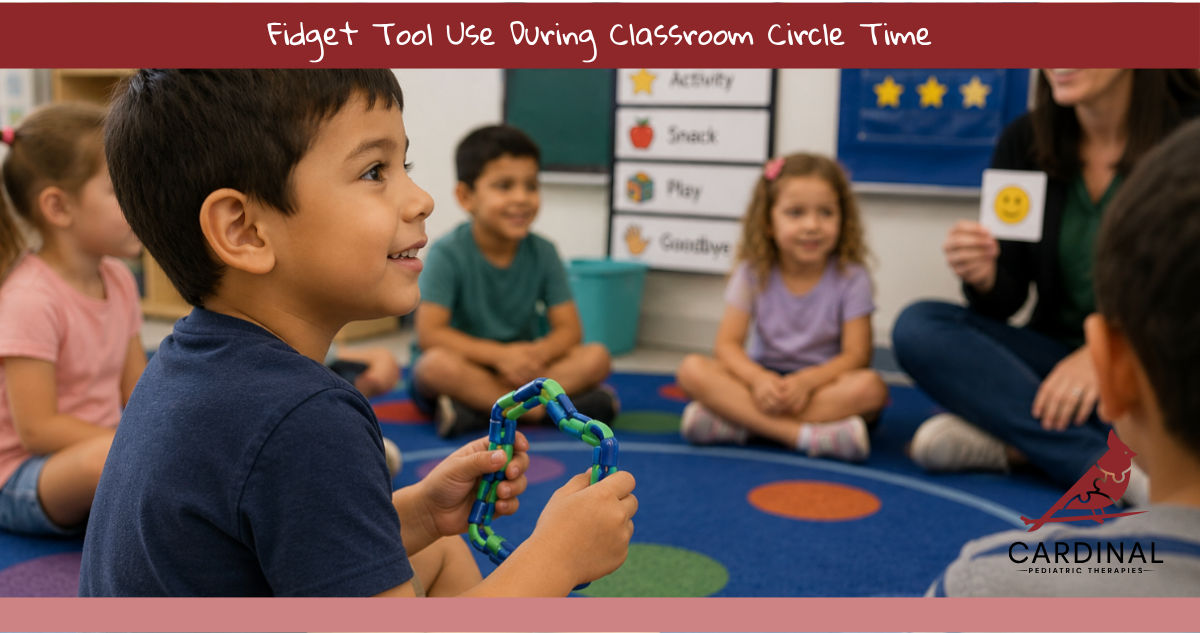
Circle time and whole-group instruction

Common challenges include sitting near peers, attending, and waiting without calling out.

Helpful supports:

  • Clear start and finish cues (song, “group time” icon, timer)
  • A small participation “job” (holding a pointer, passing a bin)
  • Reinforcing small steps first (sit for one minute, then build up)

Featured takeaway: “Doing group time” is a skill, not a personality trait.

Transitions and lining up

Transitions require flexibility, movement, and the ability to cope with uncertainty.

Helpful supports:

  • A brief countdown (two minutes, one minute, then go)
  • “First, then” language with a visual cue
  • A taught routine for lining up (stand, push chair in, hands to self, eyes forward)

Independent work and task initiation

Some students understand the content but struggle to start, stay with it, or tolerate mistakes.

Helpful supports:

  • Breaking work into short chunks with check-ins
  • “To do” and “finished” bins
  • Modeling the first step, then fading prompts
applied behavior analysis in schools

Group work and shared projects

Group work requires social communication, turn-taking, and flexibility.

Helpful supports:

  • Assigned roles (writer, reader, materials helper)
  • Visuals for “my turn” and “your turn”
  • Teaching simple scripts: “Can I have a turn?” “What should I do next?”

Recess and other unstructured time

Unstructured time can be hard when the rules change quickly and the environment is loud.

Helpful supports:

  • Pre-teaching a straightforward game with clear rules
  • A choice board of recess options (walk, swing, ball, quiet corner)
  • A plan for joining Play Plus, and a backup plan if it does not work out

ABA classroom management and individualized ABA classroom strategies

You may hear “ABA classroom management” used in different ways. Classroom management is what teachers use for everyone: routines, expectations, and consistent responses. ABA strategies can add individualized supports that help a specific student access those routines.

Classroom supports that often help many learners include:

  • Visual schedules that reduce verbal overload
  • Clear directions paired with a picture or gesture
  • Structured choices (“pencil or marker?”)
  • Reinforcement systems that fit the child’s motivation

If you want a school-focused overview that connects these ideas to classroom life, Cardinal’s article on the use of ABA in school settings expands on common supports and why they help.. 

ABA behavior support at school for communication, behavior, and academic readiness

When families search for ABA behavioral support at school, they often want help with three areas that interact throughout the day.

Communication support

When a child cannot easily communicate “help,” “break,” or “I don’t understand,” behavior may become the fastest option. ABA supports often focus on giving the child a reliable way to communicate across settings.

Examples of classroom-friendly communication goals:

  • Requesting help appropriately
  • Asking for a break using a word, card, or signal
  • Answering using choices or visuals when open-ended language is hard
  • Building participation scripts: “I need help,” “My turn,” “All done”

Replacement skills for challenging behavior

ABA does not stop at “don’t do that.” It asks, “What skill should replace it?” A child who drops to the floor during a transition may need a taught transition routine and a break signal. A child who refuses worksheets may need work chunking, a clearer start step, and a “help” response.

ABA classroom strategies

Academic readiness

Academic readiness is not only about letters and numbers. It is also:

  • Following 1 to 2 step directions
  • Waiting briefly without distress
  • Staying with a task for a short period
  • Tolerating corrections and small mistakes

Featured takeaway: When communication becomes easier, many classroom behaviors become less intense because the child has better options.

For a parent-friendly look at reinforcement and how it supports learning without turning school into a constant negotiation, this resource on positive reinforcement is a helpful companion. 

How in-clinic ABA therapy supports success at school

Many kids learn new skills more easily in a structured setting first, then carry those skills into more complex places like school. Clinic work can provide repeated practice with clear teaching, predictable routines, and gradual increases in difficulty.

In a clinic setting, common school-relevant targets include:

  • Following directions from different adults
  • Joining a small group activity
  • Practicing waiting and turn-taking
  • Building tolerance for transitions
  • Strengthening communication during mild, planned challenges

This is where clinic ABA therapy can connect directly to classroom life when goals are aligned with the school day. 

Classroom readiness autism: building skills that make school feel easier

When families search classroom readiness autism, they are usually looking for the skills that help a child handle classroom routines with less stress and more independence.

Common readiness areas include:

  • Transitioning between activities
  • Participating in a group for short periods
  • Following simple routines (hang backpack, sit at table, clean up)
  • Using communication tools to ask for help or request a break
  • Practicing early social rules like waiting and turn-taking

Cardinal’s classroom readiness support page explains how readiness skills can be practiced in a structured, child-friendly way that aligns with real classroom expectations. 

Collaboration between families, ABA providers, and schools

The strongest outcomes usually come from consistency across settings. Collaboration does not have to be complicated. Small, respectful information sharing can help teachers understand what works and what to try first.

What to share with your child’s teacher

  • What motivates your child (specific praise, movement, quiet time, preferred activities)
  • Early signs of overwhelm (covering ears, pacing, shutting down)
  • Strategies that help recovery (break card, water, quiet corner, deep breathing)
  • Phrases that work at home (“first work, then break”)
  • Visual supports that your child already understands

Evidence-based classroom resources can also help establish shared language and expectations. The IRIS Center offers practical modules on classroom behavior and instructional supports that many educators recognize.

School-focused autism resources that support families

For a broader overview of autism basics and development in plain language, the CDC’s autism resources can also serve as a starting point. For families who prefer the “what counts as evidence” question, the What Works Clearinghouse is a helpful, education-focused resource for research-backed practices.

What to remember about applied behavior analysis in the classroom

Applied behavior analysis in the classroom works best when it stays practical: teach the skill, support the routine, reinforce progress, and plan for generalization across settings.

With the right supports, many children can participate more comfortably in circle time, transitions, group work, and the everyday moments that shape confidence at school. The most helpful plans are individualized, respectful of classroom realities, and built through collaboration between families, ABA providers, and educators.

Social Skills Training Autism Families Can Feel Hopeful About

When a child has autism, connecting with peers can feel confusing or painful. Play dates stall, group activities end in tears, and parents start to worry that friendships may never come easily.

Social skills develop over time, and many kids need more than “just exposure” to learn how to join in. Structured social skills training autism programs give children clear coaching and lots of practice, so relationships feel safer and more predictable.

At Cardinal Pediatric Therapies, ABA therapists design social goals that match each child’s age, personality, and learning style for families in Cary, Phoenix, Wilmington, Clayton, and nearby communities.

Why social skills feel hard for many autistic children

Autism affects how children read cues, process language, and understand what other people expect. That often shows up during play and group time.

Many families notice that their child:

  • Prefers to play alone or repeats favorite activities instead of joining others
  • Wants friends but “freezes” or uses scripts that do not fit the moment
  • Struggles with turn taking, sharing, or waiting
  • Misreads facial expressions, tone of voice, or personal space

The University of Kansas highlights how social communication differences can limit participation in class, clubs, and community activities in its overview on autism communication.

social-training-for-autism

Autism social development is not about changing who a child is. Social training for autism focuses on giving kids tools so they can:

  • Express what they want and need
  • Understand others more clearly
  • Feel more confident around peers

What social skills training autism programs focus on

Research on social skills training autism programs shows that structured teaching can improve how children engage, problem solve, and maintain friendships.

Most programs target skill areas such as:

  • Joining play and staying with a group
  • Greetings, eye contact, and body language at a level that feels comfortable
  • Conversation turn taking and topic changes
  • Handling teasing, misunderstandings, or mistakes
  • Managing big feelings during social situations

AFIRM describes social skills interventions as step by step teaching that includes modeling, role play, and real world practice.

Cardinal’s dedicated Social Skills Training services build these abilities through play, modeling, and guided interaction that fit each child’s developmental stage.

How ABA therapy structures social training for autism

In ABA, ABA therapy social skills goals sit inside a larger plan for communication, behavior, and independence. Board Certified Behavior Analysts break social goals into small, teachable steps, then track progress over time.

Social skills training usually happens in two main formats:

  • One to one sessions that introduce new skills
  • Group social skills autism sessions that allow practice with peers

The In-Clinic ABA Therapy environment gives children a structured, supportive space for this kind of practice.

One to one ABA: building foundations for interaction

In individual sessions, therapists slow social situations down so children can understand and rehearse them.

Sessions might include:

  • Practicing simple greetings with a therapist
  • Using visual supports to plan out a play routine
  • Role playing what to say when a peer takes a turn or suggests a new game
  • Using reinforcement to celebrate every step toward interaction

The Parent Guide to ABA Therapy at Cardinal explains how these individualized goals fit within a broader treatment plan and how parents can follow progress.

autism-social-development

One to one work also leaves room for sensory breaks and coping strategies, which keeps social behavior therapy autism friendly and respectful of each child’s nervous system.

Group social skills autism sessions: practicing with peers

Once a child has some foundation skills, group work offers a safe place to try them with other kids.

ABA based groups often include:

  • Circle time with greetings and sharing
  • Cooperative games that require turn taking and problem solving
  • Guided conversation practice with clear visual supports
  • Feedback and specific praise that highlight what went well

Peer mediated models, where therapists coach peers to include and respond to autistic children, can further boost autism peer interaction support as described in resources from the Indiana Institute on Disability and Community.

Cardinal’s family and group offerings, described in the ABA group therapy overview, combine games, stories, and structured play so social training for autism feels fun, not forced.

Real life examples of skills targeted in social skills training

Parents often ask what “social skills” actually looks like in a session. In Cardinal’s programs, therapists work on everyday interaction, not polished scripts.

Common goals for improving social skills in autistic children include:

  • Play and cooperation
    • Sharing materials and taking turns
    • Joining a game that is already in progress
    • Accepting small changes in rules or routines
  • Conversation and connection
    • Starting a conversation with a peer
    • Staying on topic for a few turns
    • Asking simple follow up questions
  • Understanding others
    • Noticing basic facial expressions
    • Matching voice volume to the setting
    • Respecting personal space and boundaries

Social Stories also help children rehearse tricky situations, like asking to join a group or handling “no” from a peer, before they happen in real life, as described in Social Stories in ABA Therapy.

ABA-therapy-social-skills

Bringing social skills into school and community

Families do not want skills that only show up in the therapy room. ABA teams plan for generalization so children can use new social tools at school, in the neighborhood, and during family activities.

Therapists often:

  • Coordinate with teachers and IEP teams
  • Share simple strategies that fit into the school day
  • Use classroom like activities during in clinic sessions

For older children and teens, social behavior therapy autism plans may include community outings like playground trips, library visits, or small group meetups, always with clear expectations and support.

How Cardinal tailors social goals for each child

No two children need the same path. Some may start with basic play skills, while others benefit from more advanced coaching on friendship, group projects, or emotional problem solving.

At Cardinal, BCBAs and therapists:

  • Complete a detailed assessment that includes parent input
  • Prioritize goals that matter to the family
  • Choose teaching strategies that fit the child’s strengths and sensitivities
  • Adjust the plan as skills grow using data and observation

Over time, social training for autism becomes less about drills and more about real connection, supported by adults who know when to step in and when to step back.

How parents can support social skills training autism work at home

Parents play a huge role in keeping social growth moving between sessions.

At home, parents can:

  • Model simple social phrases during daily routines
  • Set up short, low pressure play opportunities with one familiar child
  • Use visuals and Social Stories before stressful social events
  • Praise specific social efforts, such as “You waited for your turn”

The Parent Guide to ABA Therapy at Cardinal outlines practical ways to track gains and celebrate both small and big wins.

When parents, therapists, and schools pull in the same direction, social skills training autism programs can help children move from feeling left out to feeling included.

When to consider more structured social support

Many parents seek help when they notice that their child wants friends but interactions often end in tears.

You might also notice that your child is much quieter around peers than at home, or that playground and classroom comments sound confusing or rigid.

Reaching out earlier allows coaching to line up with important milestones like preschool, kindergarten, or middle school transitions.Through social skills training and integrated ABA services, Cardinal Pediatric Therapies uses evidence informed tools to support friendships, confidence, and everyday connection for autistic children and their families.

Autism Communication Strategies Families And Schools Can Use Together

Supporting communication at school can feel overwhelming when your child has autism. Teachers may say your child is quiet in class, talks only about favorite topics, or shuts down when expectations are unclear.

The good news is that there are practical, evidence informed communication strategies for students with autism that families, teachers, and therapists can share. With the right support, many autistic students become more confident, understood, and engaged in the classroom.

At Cardinal Pediatric Therapies, ABA and speech providers partner with families and schools so communication skills show up at home, in the clinic, and in class.

Why communication is harder in busy classrooms

Autistic students often communicate in ways that look different from their peers. Some speak in full sentences but struggle with back and forth conversation, while others use gestures, pictures, or devices instead of spoken words.

Common school based challenges include:

  • Needing more time to process directions or questions
  • Having trouble explaining what they need or do not understand
  • Missing tone of voice, jokes, or unspoken social rules
  • Feeling overwhelmed by noise, crowds, or sudden changes

The University of Kansas School of Education notes that communication differences can affect how autistic students follow lessons, join group work, and ask for help.

The VCU Autism Center for Excellence also highlights that communication is deeply connected to behavior, social skills, and classroom independence.

When we talk about communication strategies for students with autism needs, we are really talking about reducing these barriers so each child can show what they know and feel safe speaking up.

communication-strategies-for-students-with-autism

Big picture communication strategies autism teams can share

Whether you are a teacher, therapist, or parent, effective school based supports usually:

  • Make language simpler, clearer, and more predictable
  • Pair speech with visual or written cues
  • Allow extra processing time without rushing for answers
  • Accept all forms of communication as valid

These same themes shape the Language & Communication services at Cardinal, where providers look at how a child understands language, how they express themselves, and what gets in the way during the school day.

Visual supports: Making classroom expectations concrete

Visual supports are any pictures, symbols, written words, or objects that help a child understand what is happening. Many autistic students are strong visual learners, so pairing language with visuals can dramatically improve comprehension.

In the classroom, visual supports might include:

  • A daily picture schedule showing the order of classes or activities
  • A simple “first/then” card to explain what happens now and next
  • Choice boards with pictures for preferred activities or break options
  • Communication boards students can point to for common words or phrases

Visual Supports and Autism explains how these tools reduce anxiety, support transitions, and help students anticipate what comes next.

The Classroom Readiness Program builds visual supports into practice for lining up, following routines, and participating in group lessons.

In many cases, these visuals make classroom communication support autism friendly by giving students a concrete way to see expectations instead of relying only on spoken directions.

Adjusting language and pace

Small changes in how adults speak can make a big difference in communication strategies for students with autism. Helpful habits include:

  • Using short, concrete sentences
  • Saying exactly what you mean, without sarcasm or hints
  • Giving one direction at a time
  • Pausing several seconds after asking a question

Instead of “Everyone should really be getting started on their work by now, OK,” a clearer direction might be “Jamie, open your math book to page 6 and start problem one.”

The organization Reading Rockets offers simple ideas for inclusive communication. Families can also ask teachers to use key phrases that their child practices in therapy so the language feels familiar across settings. Cardinal’s Parent Guide to ABA Therapy shows how shared strategies and consistent wording make it easier to see growth over time.

ABA-therapy

Teaching functional communication skills directly

Many autistic students need explicit teaching on how to:

  • Ask for help or a break
  • Request more time or a different activity
  • Say “I do not understand” or “Please repeat that”
  • Let adults know when they feel overwhelmed

In ABA therapy, these skills are taught through functional communication training, which means replacing a behavior like leaving the room or yelling with a clearer, more appropriate way to communicate the same need.

You can see this focus on practical school skills in 3 Benefits of 1-on-1 ABA Therapy.

In the clinic, therapists also plan how to generalize these skills into real classrooms so communication strategies for students with autism are applied  in therapy and carry over to their teachers and peers.

AAC and alternative ways to express needs

Some students speak very little or not at all in class. Others talk freely at home but become very quiet at school. For these children, augmentative and alternative communication (AAC) may be an important way of improving communication autism supports can provide.

AAC can include:

  • Low tech tools such as picture exchange books or communication boards
  • Simple devices with recorded messages
  • High tech tablet apps or speech generating devices

The American Speech Language Hearing Association explains that AAC supplements or replaces speech for individuals who need other ways to communicate in its practice portal on AAC.

In practice, AAC works best when the system is available all day, adults model using it in natural situations, and vocabulary is coordinated between home, school, and therapy.

The Speech Therapy team at Cardinal evaluates AAC options, chooses tools that match each child, and trains families and school staff to support them.

improving-communication-support-autism

Social communication: Beyond answering questions

Communication is not only about answering teacher questions. It includes greeting peers, sharing opinions, joining games, and handling conflict.

In the classroom, autism communication strategies for social skills might involve:

  • Pre teaching rules for group work, such as taking turns talking
  • Using Social Stories to preview substitute teachers or assemblies
  • Providing scripts or visual prompts for how to join a game
  • Practicing how to say “no” or “stop” safely

Social Stories in ABA Therapy shows how short, personalized stories can make confusing social situations more predictable and less stressful.

These supports are closely tied to goals in In-Clinic ABA Therapy, where children practice sharing, turn taking, and small group interaction in a structured setting.

The Autism Communication content in Cardinal’s autism resources also emphasizes that social communication is a skill that can be taught in small steps.

Working together: Parents, teachers, and therapists

The strongest communication strategies for students with autism are built through teamwork. Parents know their child best, teachers understand classroom demands, and therapists bring expertise in ABA and speech.

Helpful collaboration habits include:

  • Sharing a short communication profile that lists strengths, motivators, and helpful supports
  • Using a notebook, email, or app for quick updates between home and school
  • Comparing what works in ABA or speech sessions with what works in class
  • Reviewing IEP goals to be sure they include meaningful communication targets

Families often share posts from the Autism Resources section with teachers, aides, and related service providers to keep everyone on the same page.

The combined perspective makes it easier to choose communication strategies autism students can actually use in everyday school routines.

When to ask for more support

It may be time to review classroom communication supports if your child often comes home frustrated but cannot explain why. You might also notice that your child is much quieter at school than at home, or has frequent meltdowns around transitions, group work, or unclear directions.

Starting with your child’s pediatrician, school team, or existing therapists can help you decide whether additional ABA, speech therapy, or a focused classroom readiness program would be helpful. Cardinal’s classroom focused supports, including the Classroom Readiness Program, are designed to bridge home, clinic, and school so communication gains are easier to maintain.

With patient practice and coordinated planning, communication strategies autism students learn can become powerful tools for independence, friendships, and learning.

3 Benefits of 1-on-1 ABA Therapy for Children with Autism

At Cardinal Pediatric Therapies, we know that no two children are alike, especially when it comes to learning, communication, and emotional growth. Children with Autism Spectrum Disorder (ASD) often face unique challenges in developing social skills, expressing their needs, and adapting to daily routines. For parents, finding the proper support can feel overwhelming and 1 on 1 ABA Therapy benefits any child.

That’s why we offer 1 on 1 ABA therapy, also known as individualized Applied Behavior Analysis (ABA) therapy, across our clinics in Phoenix, Wilmington, Cary, and Clayton and through our in-home ABA therapy programs. This highly personalized model ensures that every session is built around your child’s strengths, needs, and goals, creating a pathway toward lasting progress and independence.

ABA therapy services are evidence-based, with decades of research confirming their effectiveness in improving communication, social skills, and daily living abilities for children with autism. The National Institutes of Health (NIH) notes that ABA techniques remain among the most widely validated interventions for individuals with ASD, helping children learn new behaviors and reduce challenges that interfere with everyday life.

Below, we’ll explore three powerful benefits of individualized ABA therapy and how this approach helps children with autism grow and thrive at home, school, and beyond.

1. Personalized ABA Treatment Plans for Every Child

A cornerstone of ABA therapy is its emphasis on data-driven personalization. At Cardinal Pediatric Therapies, every child begins with a thorough behavioral assessment conducted by a Board Certified Behavior Analyst (BCBA). This process helps identify your child’s current skills, learning style, and areas for growth.

From there, we develop a personalized treatment plan, a roadmap that targets meaningful goals such as communication, social participation, self-regulation, or academic readiness. These plans are not static. They evolve alongside your child’s progress, ensuring that therapy always reflects their current abilities and challenges.

Personalized therapy plans also facilitate greater coordination among parents, teachers, and caregivers. For example, if your child is working on sharing or turn-taking in our In-Clinic ABA Therapy sessions, our therapists can provide tools to practice those same behaviors at home or school. This consistency across environments helps children generalize new skills and apply them naturally in daily life.

According to Autism Speaks, the structure of 1 on 1 ABA therapy ensures that goals are achievable, measurable, and deeply connected to a child’s daily routines. By combining autism therapeutic services with family collaboration, we ensure that every milestone achieved in therapy is supported and celebrated beyond the clinic walls.

2. Consistent Attention and Support

For many children with autism, group settings can feel overwhelming. Loud environments, unpredictable interactions, and sensory distractions can interfere with learning. 1 on 1 ABA therapy provides a calmer, more structured space where children can focus and feel secure.

In these sessions, the therapist’s full attention is dedicated to your child. This means each prompt, reward, and strategy is tailored in real time. When a child struggles with a skill, the therapist can pause to analyze what’s happening and modify the approach immediately, something that’s difficult to achieve in group formats.

This direct attention allows for:

  • Immediate feedback that helps reinforce learning in the moment
  • Stronger engagement, since children feel seen and understood
  • More accurate progress tracking, allowing adjustments as needed
in-clinic-ABA-therapy

At Cardinal, our therapists use positive reinforcement to motivate success. Whether your child is mastering eye contact, initiating play, or using words to request something they want, each success is met with encouragement and support.

Many families also choose to combine 1 on 1 ABA Therapy sessions with Parent Coaching. This program teaches caregivers ABA strategies they can use between sessions turning everyday moments like mealtime or playtime into opportunities for growth. Parents often tell us this partnership helps them feel more confident and connected in supporting their child’s development.

3. Flexibility and Adaptability to Each Child’s Needs

Children with ASD thrive on routine but also need flexibility in how they learn. Individualized ABA therapy provides both structure and adaptability. Because therapy happens one-on-one, the therapist can modify lesson plans, adjust pacing, and introduce new teaching methods based on the child’s daily mood, progress, or emerging skills.

This adaptability is especially important for children who experience difficulty with transitions or unexpected changes. In a 1 on 1 setting, the therapist can prepare and guide the child through transitions gently, helping them build tolerance for change over time.

ABA-therapy-group

For example, if a child has mastered a communication skill in the clinic, the therapist may replicate the scenario during In-Home ABA Therapy to encourage generalization in a familiar setting. This ensures that skills learned in therapy transfer naturally into real-world routines, like brushing teeth, greeting family members, or completing schoolwork.

The Centers for Disease Control and Prevention (CDC) highlights the importance of early, adaptable interventions for children with ASD, emphasizing that flexible, individualized programs lead to better long-term outcomes. At Cardinal, this adaptability allows us to align therapy with each child’s developmental pace and sensory needs, whether sessions take place in a clinic or at home.

Why 1 on 1 ABA Therapy Works

Research consistently supports 1 on 1 ABA therapy services as one of the most effective, evidence-based approaches for children with autism. The individualized format enhances these outcomes by providing:

  • Higher engagement and motivation through personalized reinforcement systems
  • Improved communication via focused language modeling and repetition
  • Behavioral consistency that builds confidence and reduces frustration
  • Stronger parent collaboration, which accelerates progress outside of sessions

Our therapists also collaborate closely with other professionals, such as speech-language pathologists and educators, to ensure continuity of care. This multidisciplinary support reinforces Cardinal’s commitment to professionalism, empathy, and accountability, values that define every service we provide.

Building Confidence and Independence, One Session at a Time

Every child’s journey with autism is unique. Some children begin with early intervention, while others start therapy later in childhood or adolescence. Regardless of when therapy begins, 1 on 1 ABA therapy offers the individualized attention necessary to build a foundation for lifelong learning and independence.

Parents often share that their children not only gain new skills but also develop greater confidence and joy in participating in daily life. They begin to communicate their needs more clearly, engage in social play, and handle transitions with less stress. For many families, these small but meaningful changes make a world of difference.

ABA-parent-training

At Cardinal Pediatric Therapies, we see progress as a partnership. Our therapists, parents, and children work together, celebrating every milestone and addressing each challenge with compassion and creativity.

Take the Next Step Toward Personalized ABA Support

If you’re considering therapy for your child, now is the perfect time to explore a personalized 1 on 1 ABA therapy program. Cardinal Pediatric Therapies proudly serves families throughout Arizona, North Carolina, and Colorado, offering in-clinic, in-home, and group family coaching options.

Our team of highly trained professionals is here to guide your family every step of the way, from initial evaluation to ongoing therapy and parent support.

Please request a free consultation today to learn how our individualized approach can help your child grow, communicate, and connect in meaningful ways.

Dr. Mike Henderson, Ph.D., BCBA-D, LBA

Regional Operations Director

North Carolina

Mike Henderson, PhD, LBA, BCBA-D, is the Regional Operations Director at Cardinal Pediatric Therapies. With over two decades of experience in behavior analysis and organizational leadership, he focuses on mentoring teams and fostering a culture of collaboration, growth, and excellence in client care. Mike believes strong leadership and supportive systems are essential for helping clients, families, and providers succeed together.

Felicia Freeman

Clinic Manager

I am Felicia Freeman, the Clinic Manager for Cardinal Pediatric Therapies. I have been in ABA for several years now and am passionate about the community that we serve. I started out as an RBT, decided to go the administrative route, and worked my way up to managing clinics. I choose this field every day because I enjoy making a meaningful impact in the lives of our clients and building strong teams that change lives.

Amanda Dean, MA, BCBA, LBA

Johnston County, NC

Amanda graduated from The Chicago School of Professional Psychology in 2018 with her Masters in Psychology. She proceeded to complete her graduate certificate in ABA and became a BCBA in November 2020. Amanda has a passion for behavior reduction, tolerance training and functional communication training. She enjoys spending as much time as she can with her 3 children and husband. When she’s not working, Amanda is very involved in her local Pop Warner Cheerleading program where she is the Assistant Cheer Director and a head coach.


Becky Fronheiser

Operations Director

Arizona

Becky has worked in behavioral health for 7 years. She joined Cardinal in the spring of 2024.  Becky is grateful for the opportunity to work with such a passionate group of people and looks forward to supporting families with their specific ABA needs.  In her personal time, she enjoys spending quality time with her husband, 6 kids and 4 grandkids and loves to travel and relax on the beach.

Matthew Wilkinson

Operations Director

Cary, NC

Matthew holds a bachelors degree from the University of Utah, Medical Degree from the Autonomous University of Guadalajara and an MBA from Western Governors University. He has worked in the pediatric field for the majority of his professional life and has a passion for helping bring the best care to children in need. He enjoys spending time with his wife and three children and day trips to the coast.


Trisha Iannotta Bieszczad, PsyD., BCBA

Triad, NC

Trisha is a Board Certified Behavior Analyst (BCBA) with extensive expertise since 2016 in applying behavior analytic principles to improve the lives of children and adolescents. Her professional journey began with a doctoral degree in clinical psychology, emphasizing child and adolescent development. This foundation has equipped her with a deep understanding of psychological theories and practices, which she seamlessly integrates into her work as a BCBA. Outside of her professional endeavors, Trisha enjoys reading, spending time outdoors with her family & trying out new restaurants. Trisha’s dedication to both her career and personal interests reflects her commitment to continual growth and enrichment, both professionally and personally. Her multifaceted background allows her to approach each aspect of her life with a blend of expertise, enthusiasm, and a genuine appreciation for learning and exploration.

Tina Lee

Director of Finance

Tina Lee is the Finance Director for Cardinal with a variety of experience in the Healthcare Industry for over 13 years. She is compassionate and always eager to assist where she can. In the ever-changing Healthcare environment, Tina has played a vital role in putting processes in place to obtain high efficiency outcomes to help our clients get the care they need. Tina enjoys the outdoors and loves spending time with her family.

William Evans

Director of Outreach and Recruitment

William is a UNCW Graduate who started his professional career working in Marketing and Recruiting for a local technology company before looking for an opportunity to take those skills and help others. In his spare time he plays hockey, including annually for the North Carolina Autism Hockey Tournament, which is dedicated to the raising money and awareness for organizations helping local families with children diagnosed with autism.

Alice Okamoto, MA, BCBA, LBA

Chief of Staff

Alice has been with Cardinal for over 4 years and has worn many hats along the way!  Alice has a passion for working with clients and families as a unit, supervising behavior analyst trainees, and collaborating on strategic initiatives to ensure clinical efficiencies.  Alice‘s professional experience began with ABA in a school setting, and has worked in schools, homes, and clinics throughout the years while enjoying collaboration with related providers.  In her free time, Alice enjoys traveling, exploring parks with her dog, Oliver, and trying new restaurants. 

Darrin Miller

CEO

Darrin has dedicated his education and career to the field of behavioral health. As a licensed therapist and master’s in clinical counseling he works to create solutions that improve the lives of those impacted by Autism Spectrum Disorder at a local, state, and national level. He strives to create a culture of caring and empathy while innovating solutions for improving families’ access to quality care as quickly as possible.