

Center-Based ABA Therapy: What Are The Benefits?

If you are exploring ABA therapy for autism, you may be deciding between a center-based program and therapy delivered at home or in the community. Center-based care can be a strong fit for children who benefit from predictable routines, a structured learning space, and consistent support from a clinical team.

At Cardinal Pediatric Therapies, center-based ABA therapy is part of a broader set of ABA therapy services designed to help children build meaningful skills and reduce barriers that make daily life harder. The biggest benefits of center-based ABA therapy are structure, consistency, and a setting built for learning.

What Center-Based ABA Therapy Means In Plain Language

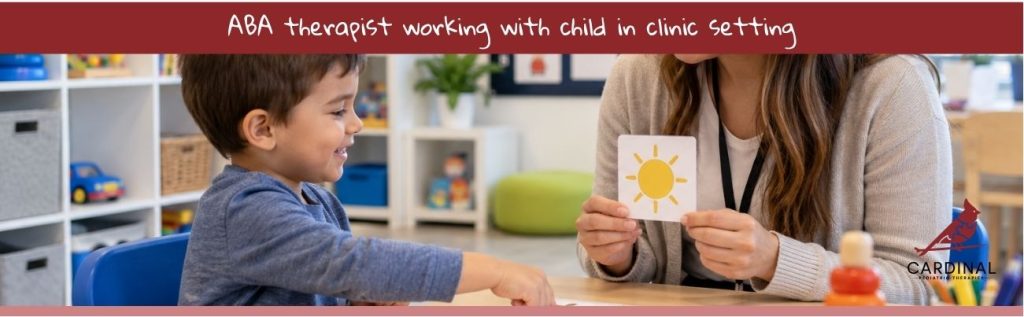
Center-based ABA therapy, sometimes called in clinic ABA therapy, takes place in a clinic environment designed to support skill building. Sessions may include structured learning for certain goals and play-based, naturalistic teaching for others. The key is that the environment is intentionally set up to reduce distractions, build routines, and make learning easier to start and maintain.

For families in Arizona and North Carolina, a center-based program can also create a clear weekly rhythm. Many parents looking for a Phoenix ABA clinic setting or a Cary or Wilmington clinic option are looking for that combination of routine and professional support.

Key Benefits Of Center-Based ABA Therapy

Strong ABA therapy starts with understanding your child as an individual. Center-based programs typically begin with a comprehensive assessment of strengths, challenges, and needs. From there, the clinical team creates a plan with goals that matter in real life, then measures progress consistently over time.

What to look for in an individualized plan:

  • Goals connected to daily routines, not just clinic activities
  • Clear definitions of what success looks like
  • Regular progress checks and plan adjustments when needed

This is where families often notice that the best programs do not run on autopilot. Progress is tracked so the team can refine teaching strategies and keep goals meaningful as your child grows. A good plan is not only personalized. It is measurable and flexible.

Specialized Learning Environment Built For Skill Development

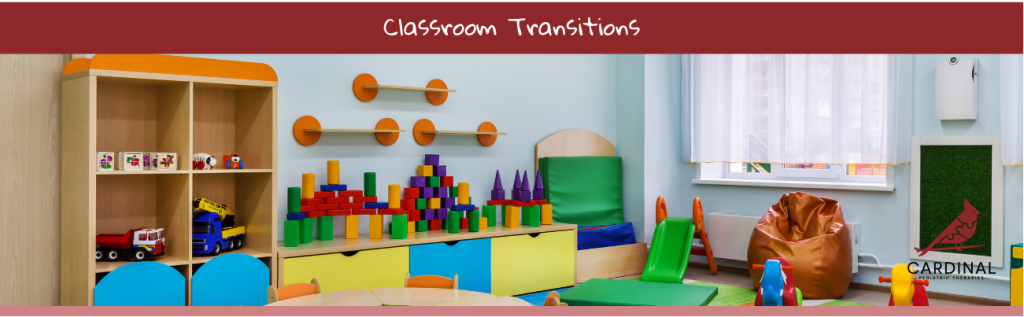
A center-based setting is designed to support learning. Clinics often include organized spaces with teaching materials, visual supports, and structured areas for different skills. This can help children focus, especially when home environments are busy or unpredictable.

Center-based environments can be especially helpful for goals tied to:

  • Attention and learning readiness
  • Communication practice
  • Daily living skills that require structured teaching steps
  • Social routines like waiting, turn-taking, and transitions
center based care autism

Qualified Team Support And Clinical Oversight

One of the most practical benefits of center-based ABA therapy is access to a trained team working in the same setting. That can support consistency in teaching methods, coordination across staff, and smoother adjustments to the plan when goals change.

When you tour a clinic or speak with an intake team, consider asking:

  • Who oversees treatment planning and updates
  • How progress is reviewed and communicated to families
  • How therapists are trained and supervised

Families should feel comfortable asking these questions. A transparent provider will explain staffing and supervision clearly.

For parents who want to understand professional expectations in behavior analysis, the Behavior Analyst Certification Board offers consumer-facing ethics resources. 

Center-Based ABA Therapy Arizona

Consistency And Routine Many Children Respond Well To

Many children do better when their schedule is predictable. A center-based program typically offers consistent session times and a stable environment, which can reduce daily uncertainty and make learning easier to maintain.

Consistency can support:

  • Better transitions into and out of therapy
  • Reduced stress around schedule changes
  • More steady practice of goals week to week

This does not mean progress is identical for every child. It means the environment is designed to support steady learning and fewer barriers.

Social Interaction Opportunities In A Supported Setting

Social skills can be challenging for many autistic children, especially when social expectations are unspoken or unpredictable. In a center-based setting, children may have more opportunities to practice social routines in a controlled environment with clinical support.

Depending on your child’s goals, this may include:

  • Practicing turn-taking and sharing
  • Communicating wants and needs with peers
  • Building tolerance for small frustrations
  • Learning flexible play skills

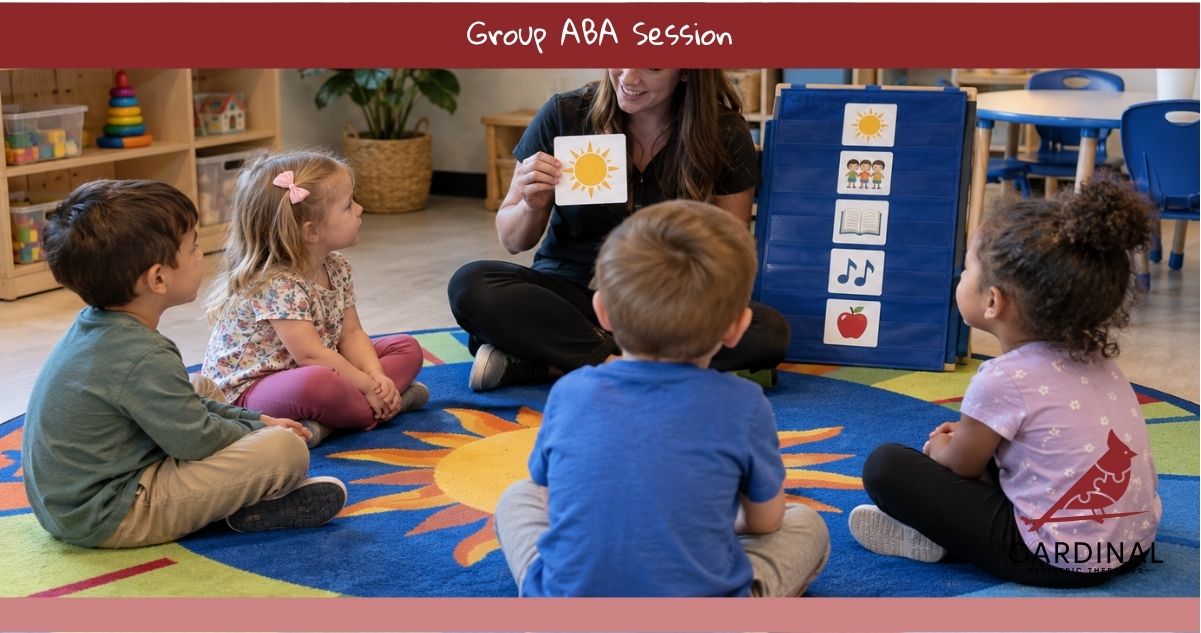
If your child benefits from structured peer practice, you may also want to explore Cardinal’s Group Family Coaching options and how group support can complement individual goals.

Family Involvement That Helps Skills Transfer Home

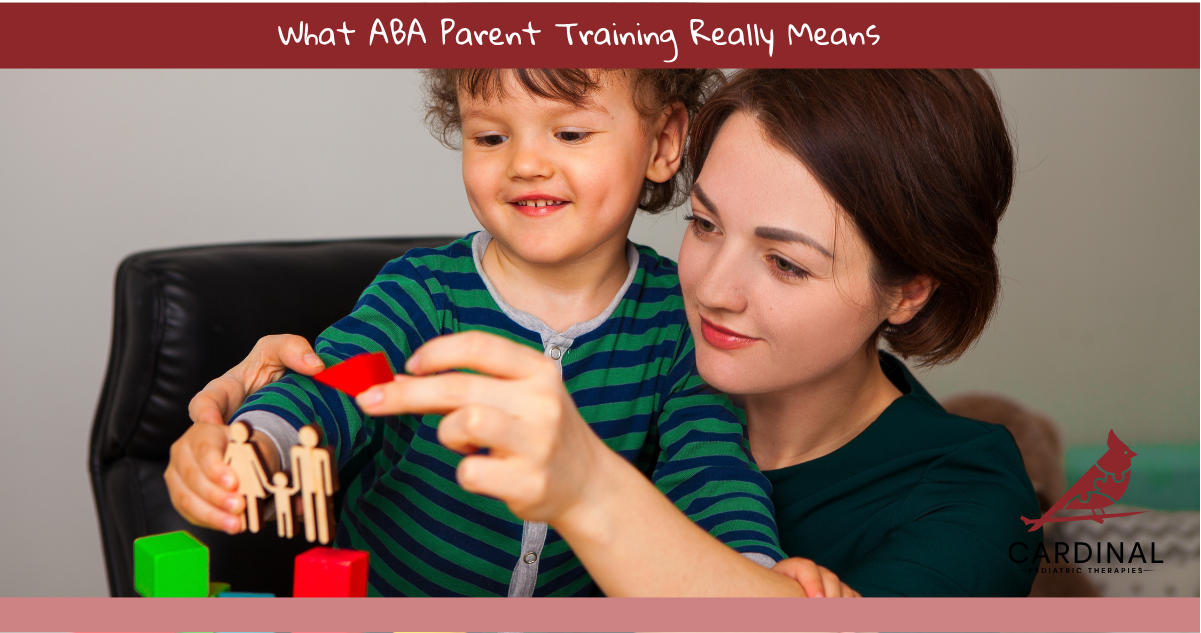
Center-based therapy should not stay inside the clinic. A strong program includes caregiver involvement so skills can carry over into real routines. Many families benefit most when they get clear guidance on how to support goals at home, in the community, and in school routines.

Family involvement may include:

  • Caregiver coaching on strategies that match your child’s plan
  • Home practice goals that fit your schedule
  • Support for common challenges like transitions, waiting, and communication

A practical way to evaluate family support is to ask how often caregiver coaching is offered and how the team helps you practice strategies in daily life, not just in a clinic meeting.

The best center-based programs help skills show up outside the clinic.

Center-Based ABA Therapy And School Readiness

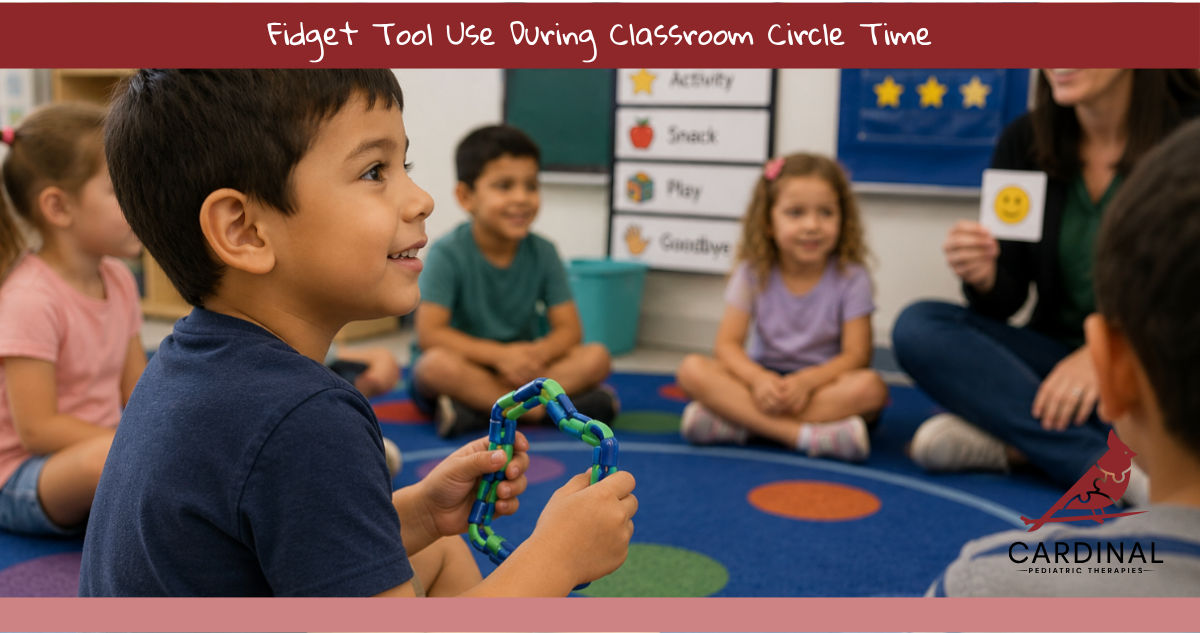
Many families seek ABA therapy services because school routines are difficult. A center-based program can support learning readiness skills such as following directions, tolerating group expectations, communicating needs appropriately, and transitioning between activities.

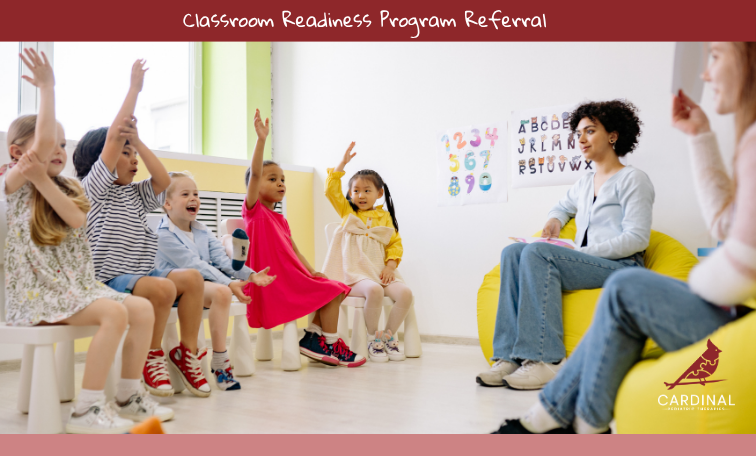
If school readiness is one of your main concerns, Cardinal’s Classroom Readiness Program page explains how foundational skills can be targeted in a structured, supportive way.

Center-Based ABA Therapy North Carolina

How Center-Based Care Fits With Other Services

Some children benefit from a coordinated approach that includes speech therapy or occupational therapy, alongside ABA therapy for autism.

Coordination typically requires parent consent and release forms, but it can help align goals and reduce mixed messages across providers. 

  • Key Considerations
    • The right fit depends on your child’s needs, your family’s routines, and what makes learning most accessible right now.

  • Questions to Ask
    • What goals will you prioritize first and why
    • How will you measure progress
    • How will you help skills transfer to home and school
    • How will you involve caregivers in the plan

Getting Started With Center-Based ABA Therapy

If you are considering center-based ABA therapy, the first step is usually an intake process that gathers background information, insurance details, and clinical history, followed by an assessment and an individualized plan.If you want to talk through whether center-based care is a good fit, Cardinal’s team can help you understand availability, scheduling options, and how the first assessment works. A supportive intake conversation should feel clear and pressure-free, with realistic expectations and a plan that matches your child’s needs.

Parent Support Autism Coach: How Group Family Coaching Helps Families Build Real Progress

A parent support autism coach helps caregivers turn day-to-day challenges into teachable moments. That support matters because progress rarely happens only during therapy sessions. It happens at breakfast, in the car, during transitions, and at bedtime. Group Family Coaching gives families a structured space to learn practical tools, share what works, and build consistency across routines.

At Cardinal Pediatric Therapies, caregiver support often shows up through parent coaching and family-centered ABA services. Group Family Coaching can complement that approach by helping parents and caregivers practice strategies that fit real life, not perfect schedules.

What a Parent Support Autism Coach does in a group setting

In Group Family Coaching, a Parent Support Autism Coach guides a small group of caregivers through goal setting, problem-solving, and skill practice. The coach keeps sessions structured, respectful, and practical. Caregivers also learn from each other’s experiences.

You may hear similar terms used for this kind of support:

  • Autism parent coaching
  • Caregiver coaching for autism
  • Family coaching for autism
  • Group parent training
  • Caregiver support group

These labels vary, but the best groups share the same core features. They teach usable strategies, practice them, and track progress.

caregiver support for autism

Why group coaching can feel different than one-on-one support

One-on-one coaching can be very effective. Group coaching adds something unique, shared context. When you hear how another family solved a similar challenge, the strategy can feel more doable. It can also help caregivers stop blaming themselves for struggles that many families share.

Group coaching often helps because it includes:

  • Normalization of common stress points
  • More examples of what strategies look like at home
  • Accountability from peers, not pressure
  • A wider set of ideas to adapt to your child

A group does not replace individualized care when a child needs it. It can strengthen daily routines that support that care.

What kids gain when caregivers gain skills

A Parent Support Autism Coach works with caregivers because kids benefit from consistent responses. Many children with autism do best when routines stay predictable and adults use similar language and expectations.

The CDC notes that behavioral approaches have strong evidence for supporting autism-related needs, including approaches like ABA that focus on building skills and reducing barriers to learning.

This reinforces why caregiver consistency matters in everyday settings: behavioral strategies work best when they show up in daily life, not just during sessions. The CDC overview on autism treatment explains this in plain language in its discussion of behavioral approaches and ABA. 

Core skills a Parent Support Autism Coach often teaches

A strong coaching group stays practical. The goal is repeatable strategies, not theory.

Communication supports that reduce frustration

Communication challenges can increase stress for kids and caregivers. Coaching groups often focus on supporting real-time communication, even when a child has limited speech.

Caregivers may practice:

  • Offering clear choices instead of open-ended questions
  • Modeling short phrases that match the situation
  • Reinforcing any attempt to communicate
  • Using visuals for routines and transitions

If a family explores AAC, it helps to have a clear definition. ASHA explains AAC as ways people communicate besides talking, including no-tech and device-based options. 

autism parent coaching group

Behavior supports that focus on teaching, not reacting

Group coaching often reframes “behavior problems” as skill gaps or unmet needs. A Parent Support Autism Coach helps caregivers shift from reacting in the moment to preventing patterns and teaching alternatives.

Common group goals include:

  • Smoother transitions between activities
  • Building tolerance for waiting
  • Teaching a replacement skill for unsafe behavior
  • Reducing power struggles around routines

This approach aligns well with home-based reinforcement and consistent follow-through.

Routines that lower stress for the whole household

Routines can reduce uncertainty, which can reduce dysregulation for many kids. Coaching groups often focus on one routine at a time so the plan stays realistic.

Many families start with:

  • Morning flow
  • Mealtime structure
  • After-school decompression
  • Bedtime steps
  • Leaving the house

A Parent Support Autism Coach often helps caregivers build a “minimum viable routine” first. It should work on busy days too.

How goals and progress tracking work in Group Family Coaching

Caregivers often feel overwhelmed by big goals. Group coaching helps families narrow focus and measure progress in a simple way.

A common structure looks like this:

  • Choose one routine that happens most days.
  • Define one target skill in plain language.
  • Pick one strategy you can repeat without extra prep.
  • Track one measure for two weeks.
  • Review results and adjust the plan.

How Group Family Coaching fits with ABA services

Many families use group coaching alongside ABA therapy. ABA tends to provide individualized skill targets and behavior supports. Group coaching helps caregivers carry those supports into real routines.

Cardinal Pediatric Therapies describes caregiver support as part of its ABA services, which can help families understand how parent coaching and family involvement fit into a broader plan of care.

Group coaching often helps with:

  • Generalization across home, school, and community
  • Consistent reinforcement and prompting across caregivers
  • Alignment between what staff teach and what parents reinforce
  • More caregiver confidence during hard moments

What to look for in a quality Parent Support Autism Coach group

Not all groups run the same way. A strong group stays structured and respectful. It should also support different family needs without turning into unstructured venting.

Look for:

  • Clear session topics and defined goals
  • Practice, modeling, and feedback
  • Realistic home practice plans
  • Respectful discussion rules
  • A simple way to measure progress

If a group includes caregiver coaching tied to ABA principles, it can help to understand how ABA formats differ. Cardinal’s resource on the different types of ABA therapy provides context without overwhelming detail.

Questions caregivers can ask before joining a group

You do not need clinical vocabulary to evaluate fit. A few direct questions can reveal whether the group is structured and practical.

Consider asking:

  • How do families set goals and track progress?
  • Do caregivers practice strategies during sessions?
  • How do you support different ages and support needs?
  • What does “home practice” look like between sessions?
  • How do you keep sessions supportive and focused?

Clear answers usually signal clear leadership.

Emotional support matters, but structure matters too

Raising a child with autism can be emotionally demanding. Group coaching can provide validation and empathy. Still, many caregivers also want practical tools. The best groups do both.

A Parent Support Autism Coach helps families:

  • Name the problem in a neutral, solvable way
  • Choose one change that can happen this week
  • Troubleshoot barriers without judgment
  • Celebrate small wins that build momentum

Parent Support Autism Coach support that builds confidence over time

A Parent Support Autism Coach does not aim to “fix” a child. The focus stays on building skills, reducing stressors, and creating predictable routines that support growth. Group Family Coaching can help caregivers feel less alone while they build strategies they can actually use.

When caregivers share a plan, kids often see clearer expectations and calmer routines. That consistency can make skill-building more efficient and daily life more manageable. A Parent Support Autism Coach helps families take the next step that fits their real routine, then builds from there.

How to Deal With Autism Behavior Problems: ABA-Based Strategies That Respect Your Child

If you are searching for how to deal with autism behavior problems, you are not alone. Many families feel worn down by meltdowns, aggression, or daily power struggles.

At Cardinal Pediatric Therapies, we approach these moments with compassion and curiosity. Behavior often signals stress, unmet needs, or skill gaps, not “badness.” This article explains common triggers, how ABA approaches behavior, and practical strategies you can use at home while staying focused on safety and connection.

Reframing autism behavior problems as communication

Many autism behavior challenges at home make more sense when you ask, “What is my child trying to communicate?” Sometimes the message is clear. Other times it hides under overwhelm.

Behavior may be saying things like:

  • “This is too loud, bright, or fast.”
  • “I do not know what you want.”
  • “I need help, a break, or more time.”
  • “I feel stuck, scared, or surprised.”
  • “I want a connection, but I do not know how.”

This mindset shift matters. It helps you respond with support instead of shame. It also makes room for teaching new skills.

Common triggers behind managing autism behavior problems

Even when behavior feels unpredictable, triggers often repeat. They can appear at home, at school, or in the community.

Common triggers include:

  • Sensory overload: noise, crowds, scratchy clothes, strong smells
  • Transitions: stopping a preferred activity, leaving the house, bedtime
  • Unclear expectations: too many words, fast instructions, vague rules
  • Task demands: hard work, long sitting, fine-motor frustration
  • Communication breakdown: limited speech, AAC not available, adults rushing
  • Body needs: hunger, thirst, constipation, fatigue, illness
  • Social stress: new people, group play, “read the room” expectations
managing autism behavior problems

Meltdowns often follow overload, not defiance. The National Autistic Society describes meltdowns as a response to being overwhelmed, and not the same as “naughty behavior.”

A quick trigger check you can do today

Before you try consequences, scan for:

  • What changed right before the behavior?
  • What did my child lose access to?
  • What sensory input increased?
  • What did my child need to do that felt hard?

That short pause can prevent escalation.

Autism tantrums vs meltdowns and why the difference helps

Families often ask about autism tantrums vs meltdowns. The words get used interchangeably, but the response you choose can change.

A tantrum often looks goal-driven. A meltdown often looks nervous-system-driven. During a meltdown, your child may lose access to coping skills and language.

The Child Mind Institute explains that meltdowns can be triggered by overwhelm and unexpected change, especially in kids who struggle with regulation.

Practical cues that suggest overwhelm:

  • Your child seems “stuck” and cannot shift gears
  • Reasoning and language stop working
  • Sensory input makes things worse
  • Recovery takes time, even after the trigger ends

During overwhelm, prioritize safety and calming first. Teaching usually works better later.

How ABA assesses behavior with the ABC model

ABA strategies for challenging behavior work best when you understand the pattern. ABA often starts with the ABC model:

  • A: Antecedent (what happens right before)
  • B: Behavior (what the behavior looks like)
  • C: Consequence (what happens right after)

This helps you see the function. Many behaviors aim to get something or escape something.

A simple ABC example:

  • A: You say, “Time to turn off the tablet.”
  • B: Your child screams and throws the tablet.
  • C: The tablet stays on while you calm them down.

Your child may learn, “Screaming buys more time.” No one intends to teach that. It just happens.

The CDC notes that behavioral approaches focus on what happens before and after a behavior, and highlights ABA as a well-known behavioral treatment for autistic individuals.

Practical ways to deal with autism behavior problems at home

If you want to know how to deal with autism behavior problems day to day, think in three lanes: prevent, teach, and respond.

1) Prevention strategies that lower stress

Prevention is not “giving in.” It is setting the day up for success.

Try:

  • Keep routines predictable when you can
  • Use short, clear directions
  • Offer limited choices (“red shirt or blue shirt?”)
  • Build in movement breaks before hard tasks
  • Preview transitions with a timer or a visual

Visual supports help many families reduce confusion and increase predictability. A practical guide is Cardinal’s post on visual supports and autism.

2) Teach replacement skills, not just “stop that”

Replacement skills help your child meet the same need in a different way.

Examples:

  • Teach “break” instead of bolting
  • Teach “help” instead of throwing
  • Teach “all done” instead of dropping to the floor
  • Teach “my turn” instead of grabbing

If your child uses AAC or you are exploring it, keep access consistent during tough moments. A communication tool that disappears during stress will not help when it matters.

handling meltdowns in autism

3) Reinforce the behaviors you want to see

Reinforcement means a behavior is more likely to happen again. It is not bribery. It is feedback.

What tends to work:

  • Praise that names the skill (“You waited.”)
  • Fast access to a preferred item after the replacement skill
  • Small rewards tied to specific goals
  • Short practice moments, then success

For more examples of reinforcement that stay practical for families, see Cardinal’s article on positive reinforcement for autism.

4) Respond during a meltdown with safety and simplicity

Handling meltdowns in autism often requires less talking, not more.

During escalation:

  • Reduce language and lower your voice
  • Remove extra demands
  • Create space and reduce sensory input
  • Keep your body calm and predictable
  • Aim for safety, not a lecture

After recovery:

  • Reconnect first
  • Review the plan in simple terms
  • Practice the replacement skill during calm time

Autism aggressive behavior support and safety planning

Aggression and self-injury can happen for many reasons, including fear, pain, sensory overload, or communication barriers. If you see sudden changes, consider medical factors and talk with your child’s healthcare team. If anyone is in immediate danger, seek emergency help right away.

Home safety steps that often help:

  • Remove hard or sharp objects during escalation windows
  • Create a calm-down area with low stimulation
  • Block access to unsafe spaces when overwhelm rises
  • Teach a “safe hands” replacement paired with a concrete action
  • Track patterns so you can reduce known triggers

If aggression or self-injury is frequent, professional support matters. A behavior assessment can identify function and guide safer, more effective plans.

autism behavior challenges at home

How Cardinal’s ABA programs support families

Families often feel relief when they stop guessing. Structured ABA can help by clarifying triggers, teaching replacement skills, and coaching caregivers on consistent responses.

Cardinal’s in-clinic ABA therapy setting supports skill-building through structured routines, guided practice, and planned activities that target regulation and communication. Cardinal also maintains a centralized hub of autism resources that families can share with caregivers and school teams as plans evolve.

Steady steps that make tough days easier

Learning how to deal with autism behavior problems rarely comes from one perfect trick. It comes from patterns, small changes, and skill-building over time.

When you treat behavior as communication, track triggers, and teach replacements, you create more calm moments to build on. Managing autism behavior problems gets easier when safety, connection, and consistency lead the plan.

ABA Clinics Should Be Ran by BCBAs, Here’s Why

Applied Behavior Analysis (ABA) therapy can help children with autism spectrum disorder (ASD) build communication, learning, and daily living skills. But ABA quality depends on more than session time. It depends on clinical leadership. That is why ABA clinics should be ran by BCBAs. 

A Board Certified Behavior Analyst (BCBA) brings graduate-level training, strong ethics standards, and the authority to supervise the team that delivers therapy. Families often see the difference fast. A BCBA-led ABA clinic, such as Cardinal Pediatric Therapies, sets clear goals, tracks progress, and updates plans when a child’s needs change. 

What “BCBA-led” should mean in real life

Many clinics say they “have a BCBA.” That alone does not tell you much. In a truly clinically led ABA program, BCBAs guide the day-to-day clinical work, not just the intake paperwork.

Look for a model where the BCBA:

  • Completes or directs assessments
  • Writes the treatment plan and owns the goals
  • Supervises technicians with direct observation
  • Reviews data on a set schedule
  • Teaches caregivers how to use strategies at home

If you want a quick view of how Cardinal Pediatric Therapies describes its ABA programs and supervision structure, start here.

BCBA led arizona

1) BCBAs bring specialized ABA expertise

ABA looks simple from the outside. It is not. A BCBA studies behavior analysis, skill acquisition, and ethics at the graduate level. The BACB describes BCBAs as independent practitioners who can provide behavior-analytic services and supervise others who implement interventions. 

That training shows up in practical ways:

  • better goal selection that fits your child’s learning profile
  • clearer teaching strategies, not trial-and-error guessing
  • stronger safety planning for complex behaviors
  • more consistent decision-making across the team

In short, board-certified behavior analyst oversight helps keep therapy focused and intentional.

2) Individualized treatment plans start with BCBA-level assessment

ABA should never feel like a template. Each child needs goals that match their skills and daily routines. The CDC notes that behavioral approaches have the most evidence for treating symptoms of ASD, and it names ABA as a notable behavioral treatment.

A BCBA-supervised ABA therapy plan often includes:

  • measurable goals tied to communication, play, independence, or coping
  • steps that build toward bigger skills over time
  • strategies that fit your child’s motivation and sensory needs
  • a plan for generalization across home, school, and community

3) BCBA supervision keeps sessions consistent across staff

Registered Behavior Technicians (RBTs) or behavior technicians often lead direct therapy sessions across numerous clinical settings. This operational structure can be highly effective and efficient for service delivery.

However, its success depends on robust, consistent supervisory oversight. The quality of care and treatment integrity must be rigorously maintained through regular, rigorous clinical supervision by qualified professionals to ensure the best outcomes for clients receiving behavioral health services.

When a BCBA supervises well, you often see:

  • Cleaner teaching during sessions
  • More accurate data tracking
  • Fewer “mixed messages” across staff
  • Faster fixes when a strategy is not working

4) Good data needs good decisions

Applied Behavior Analysis (ABA) is inherently data-driven, using collected information to inform subsequent treatment steps and modifications.

However, raw data alone does not provide a complete picture. A Board Certified Behavior Analyst (BCBA) is essential to accurately interpret the data, draw meaningful conclusions, and translate those insights into effective, actionable treatment plans for the client.

A strong BCBA-led team asks questions like:

  • Does the child do the skill without prompts?
  • Does the skill show up with new people?
  • Do behaviors decrease because a replacement skill grows?
  • Do we need to adjust the reinforcement or the task difficulty?

A BCBA can also spot quality issues. For example, a child may “perform” during sessions but struggle in daily routines. That signals a generalization problem, not a motivation problem.

ABA treatment phoenix

5) Challenging behaviors require functional, skill-based plans

Many families seek ABA because challenging behaviors disrupt safety or daily life. A BCBA can run or guide a functional assessment. That helps the team understand why the behavior happens. Then the team can teach a safer replacement skill.

A BCBA-led behavior plan often focuses on:

  • prevention and better transitions
  • communication alternatives
  • coping skills and tolerance building
  • reinforcement for replacement behaviors
  • a clear plan for caregiver follow-through
  • The best behavior plans teach new skills, they do not just suppress behavior.

6) BCBA involvement strengthens caregiver coaching

Caregiver support is most effective when closely aligned with the established treatment plan. Families require practical strategies that can be consistently implemented at home. A Board Certified Behavior Analyst (BCBA) is skilled at teaching these strategies and then customizing them to seamlessly integrate with the family’s existing routines and daily life.

Two reads which support this include:

A BCBA-run clinic should also explain the “why” behind a strategy. That builds confidence. It also improves consistency, which helps skills stick.

Questions to ask before you choose a clinic

To determine if a clinic adheres to the crucial standard of being run by Board Certified Behavior Analysts (BCBAs), you must seek clear, defined answers to the following simple questions.

This inquiry is essential for ensuring that the services provided meet the highest professional and ethical requirements in behavior analysis. Confirming BCBA oversight guarantees qualified supervision and delivery of effective, evidence-based treatment plans.

BCBA involvement

  • Who writes and updates the treatment plan?
  • How often does a BCBA observe sessions?
  • How do you decide when goals change?

Supervision and staffing

  • Who supervises the RBTs working with my child?
  • What does supervision include besides notes?
  • How do you handle staff turnover on a case?

Progress and accountability

  • How do you measure progress week to week?
  • What happens when progress slows?
  • How do you help skills generalize outside the clinic?
ABA treatment Arizona

Choose clinical leadership you can measure

Families do not need perfect therapy. They need therapy that stays consistent, ethical, and responsive. Cardinal Pediatric Therapies, for example, ensures this by having its ABA clinics led by BCBAs, who design individualized plans, supervise the team, and adjust care based on real progress. 

That is the case for BCBA-led care. ABA clinics should be run by BCBAs because BCBAs design individualized plans, supervise the team, and adjust care based on real progress.

When you can see that process clearly, you can feel more confident in the support your child receives.

Autism Communication Strategies Families And Schools Can Use Together

Supporting communication at school can feel overwhelming when your child has autism. Teachers may say your child is quiet in class, talks only about favorite topics, or shuts down when expectations are unclear.

The good news is that there are practical, evidence informed communication strategies for students with autism that families, teachers, and therapists can share. With the right support, many autistic students become more confident, understood, and engaged in the classroom.

At Cardinal Pediatric Therapies, ABA and speech providers partner with families and schools so communication skills show up at home, in the clinic, and in class.

Why communication is harder in busy classrooms

Autistic students often communicate in ways that look different from their peers. Some speak in full sentences but struggle with back and forth conversation, while others use gestures, pictures, or devices instead of spoken words.

Common school based challenges include:

  • Needing more time to process directions or questions
  • Having trouble explaining what they need or do not understand
  • Missing tone of voice, jokes, or unspoken social rules
  • Feeling overwhelmed by noise, crowds, or sudden changes

The University of Kansas School of Education notes that communication differences can affect how autistic students follow lessons, join group work, and ask for help.

The VCU Autism Center for Excellence also highlights that communication is deeply connected to behavior, social skills, and classroom independence.

When we talk about communication strategies for students with autism needs, we are really talking about reducing these barriers so each child can show what they know and feel safe speaking up.

communication-strategies-for-students-with-autism

Big picture communication strategies autism teams can share

Whether you are a teacher, therapist, or parent, effective school based supports usually:

  • Make language simpler, clearer, and more predictable
  • Pair speech with visual or written cues
  • Allow extra processing time without rushing for answers
  • Accept all forms of communication as valid

These same themes shape the Language & Communication services at Cardinal, where providers look at how a child understands language, how they express themselves, and what gets in the way during the school day.

Visual supports: Making classroom expectations concrete

Visual supports are any pictures, symbols, written words, or objects that help a child understand what is happening. Many autistic students are strong visual learners, so pairing language with visuals can dramatically improve comprehension.

In the classroom, visual supports might include:

  • A daily picture schedule showing the order of classes or activities
  • A simple “first/then” card to explain what happens now and next
  • Choice boards with pictures for preferred activities or break options
  • Communication boards students can point to for common words or phrases

Visual Supports and Autism explains how these tools reduce anxiety, support transitions, and help students anticipate what comes next.

The Classroom Readiness Program builds visual supports into practice for lining up, following routines, and participating in group lessons.

In many cases, these visuals make classroom communication support autism friendly by giving students a concrete way to see expectations instead of relying only on spoken directions.

Adjusting language and pace

Small changes in how adults speak can make a big difference in communication strategies for students with autism. Helpful habits include:

  • Using short, concrete sentences
  • Saying exactly what you mean, without sarcasm or hints
  • Giving one direction at a time
  • Pausing several seconds after asking a question

Instead of “Everyone should really be getting started on their work by now, OK,” a clearer direction might be “Jamie, open your math book to page 6 and start problem one.”

The organization Reading Rockets offers simple ideas for inclusive communication. Families can also ask teachers to use key phrases that their child practices in therapy so the language feels familiar across settings. Cardinal’s Parent Guide to ABA Therapy shows how shared strategies and consistent wording make it easier to see growth over time.

ABA-therapy

Teaching functional communication skills directly

Many autistic students need explicit teaching on how to:

  • Ask for help or a break
  • Request more time or a different activity
  • Say “I do not understand” or “Please repeat that”
  • Let adults know when they feel overwhelmed

In ABA therapy, these skills are taught through functional communication training, which means replacing a behavior like leaving the room or yelling with a clearer, more appropriate way to communicate the same need.

You can see this focus on practical school skills in 3 Benefits of 1-on-1 ABA Therapy.

In the clinic, therapists also plan how to generalize these skills into real classrooms so communication strategies for students with autism are applied  in therapy and carry over to their teachers and peers.

AAC and alternative ways to express needs

Some students speak very little or not at all in class. Others talk freely at home but become very quiet at school. For these children, augmentative and alternative communication (AAC) may be an important way of improving communication autism supports can provide.

AAC can include:

  • Low tech tools such as picture exchange books or communication boards
  • Simple devices with recorded messages
  • High tech tablet apps or speech generating devices

The American Speech Language Hearing Association explains that AAC supplements or replaces speech for individuals who need other ways to communicate in its practice portal on AAC.

In practice, AAC works best when the system is available all day, adults model using it in natural situations, and vocabulary is coordinated between home, school, and therapy.

The Speech Therapy team at Cardinal evaluates AAC options, chooses tools that match each child, and trains families and school staff to support them.

improving-communication-support-autism

Social communication: Beyond answering questions

Communication is not only about answering teacher questions. It includes greeting peers, sharing opinions, joining games, and handling conflict.

In the classroom, autism communication strategies for social skills might involve:

  • Pre teaching rules for group work, such as taking turns talking
  • Using Social Stories to preview substitute teachers or assemblies
  • Providing scripts or visual prompts for how to join a game
  • Practicing how to say “no” or “stop” safely

Social Stories in ABA Therapy shows how short, personalized stories can make confusing social situations more predictable and less stressful.

These supports are closely tied to goals in In-Clinic ABA Therapy, where children practice sharing, turn taking, and small group interaction in a structured setting.

The Autism Communication content in Cardinal’s autism resources also emphasizes that social communication is a skill that can be taught in small steps.

Working together: Parents, teachers, and therapists

The strongest communication strategies for students with autism are built through teamwork. Parents know their child best, teachers understand classroom demands, and therapists bring expertise in ABA and speech.

Helpful collaboration habits include:

  • Sharing a short communication profile that lists strengths, motivators, and helpful supports
  • Using a notebook, email, or app for quick updates between home and school
  • Comparing what works in ABA or speech sessions with what works in class
  • Reviewing IEP goals to be sure they include meaningful communication targets

Families often share posts from the Autism Resources section with teachers, aides, and related service providers to keep everyone on the same page.

The combined perspective makes it easier to choose communication strategies autism students can actually use in everyday school routines.

When to ask for more support

It may be time to review classroom communication supports if your child often comes home frustrated but cannot explain why. You might also notice that your child is much quieter at school than at home, or has frequent meltdowns around transitions, group work, or unclear directions.

Starting with your child’s pediatrician, school team, or existing therapists can help you decide whether additional ABA, speech therapy, or a focused classroom readiness program would be helpful. Cardinal’s classroom focused supports, including the Classroom Readiness Program, are designed to bridge home, clinic, and school so communication gains are easier to maintain.

With patient practice and coordinated planning, communication strategies autism students learn can become powerful tools for independence, friendships, and learning.

Autism Sleep Regression

Sleep is a vital part of every child’s development, but for many families raising children with autism, restful nights can be hard to come by. 

Even when sleep routines are well-established, there may be times when those routines suddenly stop working. If your child was once sleeping through the night and is now struggling again, you may be dealing with what’s known as autism sleep regression.

At Cardinal Pediatric Therapies, we understand how stressful it can be to navigate sleep challenges, particularly when they impact your child’s behavior, learning, and overall well-being. 

In this article, we’ll explain what autism sleep regression is, why it happens, and how evidence-based therapy can help restore healthy sleep habits for both your child and your family.

Autism Sleep Regression

What Is Autism Sleep Regression?

Autism sleep regression refers to the return of sleep difficulties in a child on the autism spectrum after a period of restful or improved sleep. 

While sleep regressions can occur in all children during developmental stages, the experience can be more intense, prolonged, and disruptive for children with autism.

Sleep regression may look like:

  • Trouble falling asleep at night
  • Waking up frequently after falling asleep
  • Reduced total sleep hours
  • Increased resistance to bedtime
  • More anxiety or irritability during the day

These regressions may occur suddenly or develop over time. They are especially common during transitions, such as starting school, moving to a new home, or experiencing a change in routine.

Why Sleep Regression Happens in Children with Autism

Sleep problems are already common in children with autism. Research shows that up to 80% of children on the autism spectrum experience some form of sleep disturbance. 

So, what makes autism sleep regression different?

1. Sensory Sensitivities

Children with autism often process sensory information in a different way. Sounds, textures, lights, or even changes in bedding can disrupt their sense of comfort and safety at night.

2. Changes in Routine

Children on the spectrum often rely on predictability to feel secure. A sudden shift, like school starting, a caregiver leaving, or daylight saving time, can trigger anxiety and difficulty sleeping.

3. Co-occurring Conditions

Many children with autism also experience challenges such as anxiety, ADHD, gastrointestinal issues, or epilepsy. These can contribute to poor sleep or cause regressions during otherwise stable periods.

4. Difficulty Understanding Transitions

Some children struggle to interpret bedtime cues or recognize when it’s time to sleep. Without strong associations, transitions from play to rest can become battles.

Why Sleep Regression Happens in Children with Autism

Signs of Autism Sleep Regression

Identifying sleep regression early can help you respond before it disrupts your household. Here are some signs to watch for:

  • A sudden increase in night wakings
  • Longer time to fall asleep
  • Refusal to go to bed
  • More frequent meltdowns, especially in the morning or evening
  • Daytime sleepiness, poor focus, or mood swings

If these changes persist for more than two to three weeks, consider behavioral intervention or professional support.

How ABA Therapy Helps Improve Sleep

Applied Behavior Analysis (ABA) is a powerful tool for addressing sleep-related behavioral issues. Cardinal Pediatric Therapies’ ABA programs are tailored to each child’s needs, including support for healthy sleep routines.

Positive Reinforcement

Children are taught to associate bedtime routines with calm, rewarding outcomes. This helps reduce resistance and create a sense of safety around sleep.

Visual Schedules

Many children benefit from seeing the steps leading up to bedtime. Visual schedules promote consistency and help children understand what’s coming next.

Coping Tools

For children who experience anxiety at bedtime, ABA therapists can teach calming strategies like deep breathing, storytime routines, or comfort item use.

Gradual Desensitization

If certain sensory elements (such as pajamas or low light levels) trigger discomfort, therapists can help children adapt gradually through exposure and support.

What Parents Can Do at Home

You don’t have to wait for a professional to begin supporting your child through sleep challenges. These practical strategies can help reinforce progress and reduce sleep regression symptoms:

  • Stick to a consistent bedtime and wake-up time, even on weekends
  • Create a calming pre-bedtime routine (bath, book, soft music)
  • Limit screen time at least one hour before bed
  • Use blackout curtains or white noise to reduce sensory distractions
  • Avoid sugary snacks or caffeine in the evening
  • Introduce a visual schedule or checklist for bedtime steps

Most importantly, be patient. Children on the autism spectrum often need more time to adjust to changes. Stay consistent, even when it’s tough.

How Cardinal Pediatric Therapies Supports Sleep Challenges

How Cardinal Pediatric Therapies Supports Sleep Challenges

At Cardinal, we specialize in helping children on the autism spectrum develop essential life skills, including effective sleep routines. 

Our therapy services are available across Arizona and North Carolina, and we work closely with families to build consistency between therapy and home.

Here’s how we can help with autism sleep regression:

  • In-home ABA therapy that incorporates your child’s unique sleep patterns and bedtime environment
  • Parent coaching to teach you how to reinforce routines and manage bedtime resistance
  • Classroom readiness support for children who need help managing transitions between activities
  • Sensory strategies and sleep-friendly tools tailored to your child’s sensitivities

We also coordinate with pediatricians and other specialists to address co-occurring conditions or medical concerns in a holistic manner.

When to Seek Professional Help

While occasional sleep disruption is regular, consistent patterns of sleep regression should not be ignored. You should consider reaching out to a provider like Cardinal Pediatric Therapies if:

  • Your child’s sleep issues have lasted more than 2–3 weeks
  • Daytime behavior is worsening
  • Sleep problems are causing stress for the whole family
  • You’re unsure how to build or enforce a routine
  • Your child has additional needs related to anxiety, sensory processing, or communication

We’re here to guide you with evidence-based care designed for long-term results.

Final Thoughts

Sleep is not just a break from the day; it’s essential for brain development, emotional balance, and learning. For children with autism, quality sleep can make the difference between daily struggles and meaningful progress. If your child is experiencing autism sleep regression, know that you’re not alone, and help is available.

At Cardinal Pediatric Therapies, we partner with families to overcome sleep challenges through compassionate, customized therapy. With the right plan, structure, and support, restful nights can become the new normal.

Frequently Asked Questions About Autism Sleep Regression

What is autism sleep regression?

Autism sleep regression refers to the recurrence of sleep challenges, such as trouble falling asleep, nighttime wakings, or bedtime resistance, after a period of restful sleep. It’s more common in children on the autism spectrum due to their sensitivity to routine changes, sensory input, and emotional regulation.

Is sleep regression more common in autistic children?

Yes. Children with autism are more likely to experience sleep problems overall, and regressions tend to be more intense or long-lasting compared to neurotypical peers. Transitions, anxiety, and changes in routine can easily disrupt previously stable sleep patterns.

What causes autism sleep regression?

Common causes include sensory sensitivities (e.g., noise, light, textures), disruptions to routines, anxiety, co-occurring conditions (such as ADHD or gastrointestinal issues), and emotional transitions, such as starting school or moving.

How can I tell if my child is experiencing sleep regression?

Signs include sudden changes in sleep habits, such as difficulty falling asleep, frequent nighttime waking, shorter sleep duration, increased meltdowns, or daytime fatigue. It may be a true regression if these patterns last more than 2–3 weeks.

How long does autism sleep regression last?

There’s no set timeline, but it can persist for weeks or even months without intervention. Consistent bedtime routines, environmental adjustments, and behavioral therapy can help shorten the regression period.

Can ABA therapy help with autism sleep regression?

Yes. ABA therapy can help improve bedtime behaviors, establish routines, reduce anxiety associated with sleep, and teach children how to self-regulate during nighttime awakenings. Cardinal Pediatric Therapies offers ABA-based strategies specifically for sleep challenges.

Should I let my autistic child cry it out?

In general, “cry it out” approaches are not recommended for children with autism, especially if they have communication difficulties or sensory sensitivities. A gentler, structured, positive reinforcement plan is often more effective and supportive.

When should I seek help for autism sleep regression?

If your child’s sleep issues last over a few weeks, lead to behavioral concerns during the day or cause significant family stress, it’s time to seek help. Cardinal Pediatric Therapies can offer guidance through in-home or in-clinic ABA therapy.

Dr. Mike Henderson, Ph.D., BCBA-D, LBA

Regional Operations Director

North Carolina

Mike Henderson, PhD, LBA, BCBA-D, is the Regional Operations Director at Cardinal Pediatric Therapies. With over two decades of experience in behavior analysis and organizational leadership, he focuses on mentoring teams and fostering a culture of collaboration, growth, and excellence in client care. Mike believes strong leadership and supportive systems are essential for helping clients, families, and providers succeed together.

Felicia Freeman

Clinic Manager

I am Felicia Freeman, the Clinic Manager for Cardinal Pediatric Therapies. I have been in ABA for several years now and am passionate about the community that we serve. I started out as an RBT, decided to go the administrative route, and worked my way up to managing clinics. I choose this field every day because I enjoy making a meaningful impact in the lives of our clients and building strong teams that change lives.

Amanda Dean, MA, BCBA, LBA

Johnston County, NC

Amanda graduated from The Chicago School of Professional Psychology in 2018 with her Masters in Psychology. She proceeded to complete her graduate certificate in ABA and became a BCBA in November 2020. Amanda has a passion for behavior reduction, tolerance training and functional communication training. She enjoys spending as much time as she can with her 3 children and husband. When she’s not working, Amanda is very involved in her local Pop Warner Cheerleading program where she is the Assistant Cheer Director and a head coach.

Becky Fronheiser

Operations Director

Arizona

Becky has worked in behavioral health for 7 years. She joined Cardinal in the spring of 2024.  Becky is grateful for the opportunity to work with such a passionate group of people and looks forward to supporting families with their specific ABA needs.  In her personal time, she enjoys spending quality time with her husband, 6 kids and 4 grandkids and loves to travel and relax on the beach.

Matthew Wilkinson

Operations Director

Cary, NC

Matthew holds a bachelors degree from the University of Utah, Medical Degree from the Autonomous University of Guadalajara and an MBA from Western Governors University. He has worked in the pediatric field for the majority of his professional life and has a passion for helping bring the best care to children in need. He enjoys spending time with his wife and three children and day trips to the coast.


Trisha Iannotta Bieszczad, PsyD., BCBA

Triad, NC

Trisha is a Board Certified Behavior Analyst (BCBA) with extensive expertise since 2016 in applying behavior analytic principles to improve the lives of children and adolescents. Her professional journey began with a doctoral degree in clinical psychology, emphasizing child and adolescent development. This foundation has equipped her with a deep understanding of psychological theories and practices, which she seamlessly integrates into her work as a BCBA. Outside of her professional endeavors, Trisha enjoys reading, spending time outdoors with her family & trying out new restaurants. Trisha’s dedication to both her career and personal interests reflects her commitment to continual growth and enrichment, both professionally and personally. Her multifaceted background allows her to approach each aspect of her life with a blend of expertise, enthusiasm, and a genuine appreciation for learning and exploration.

Tina Lee

Director of Finance

Tina Lee is the Finance Director for Cardinal with a variety of experience in the Healthcare Industry for over 13 years. She is compassionate and always eager to assist where she can. In the ever-changing Healthcare environment, Tina has played a vital role in putting processes in place to obtain high efficiency outcomes to help our clients get the care they need. Tina enjoys the outdoors and loves spending time with her family.

William Evans

Director of Outreach and Recruitment

William is a UNCW Graduate who started his professional career working in Marketing and Recruiting for a local technology company before looking for an opportunity to take those skills and help others. In his spare time he plays hockey, including annually for the North Carolina Autism Hockey Tournament, which is dedicated to the raising money and awareness for organizations helping local families with children diagnosed with autism.

Alice Okamoto, MA, BCBA, LBA

Chief of Staff

Alice has been with Cardinal for over 4 years and has worn many hats along the way!  Alice has a passion for working with clients and families as a unit, supervising behavior analyst trainees, and collaborating on strategic initiatives to ensure clinical efficiencies.  Alice‘s professional experience began with ABA in a school setting, and has worked in schools, homes, and clinics throughout the years while enjoying collaboration with related providers.  In her free time, Alice enjoys traveling, exploring parks with her dog, Oliver, and trying new restaurants. 

Darrin Miller

CEO

Darrin has dedicated his education and career to the field of behavioral health. As a licensed therapist and master’s in clinical counseling he works to create solutions that improve the lives of those impacted by Autism Spectrum Disorder at a local, state, and national level. He strives to create a culture of caring and empathy while innovating solutions for improving families’ access to quality care as quickly as possible.