
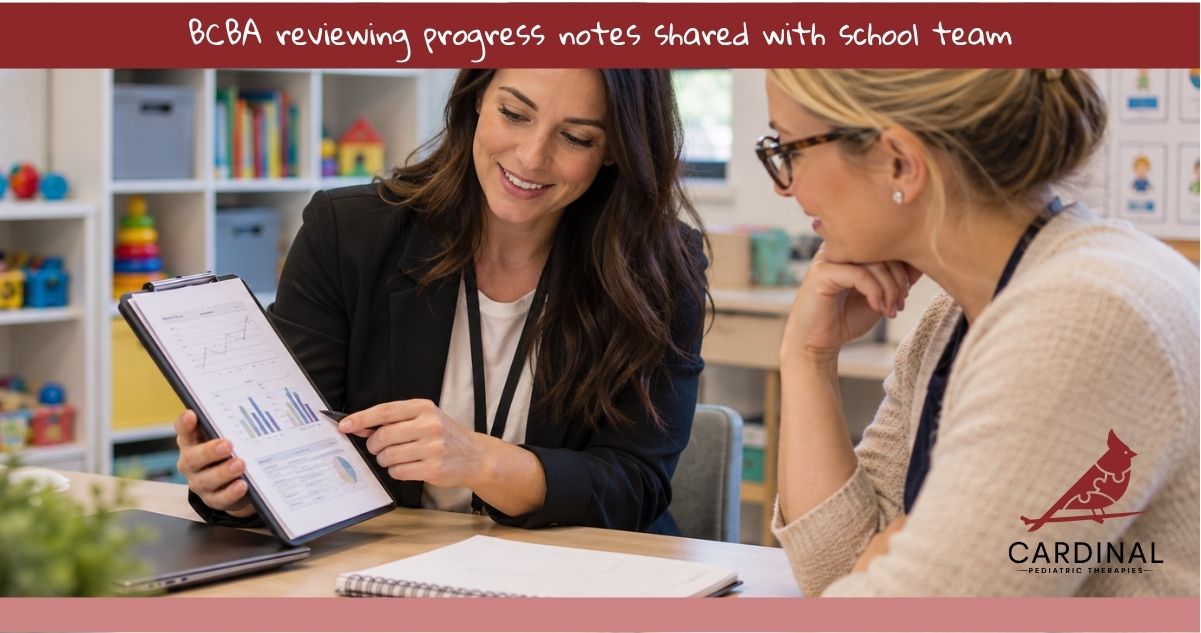
School-based ABA therapy means a behavior analyst or technician works with a child right inside their classroom, alongside their teacher. It’s one of four common ways ABA gets delivered; the others are center-based, in-home, and a hybrid of the two.
No single model is automatically the best fit for every child. In practice, what your school district and insurance plan offer often matters as much as which model works best in theory.
What does “School-Based ABA Therapy” Mean?
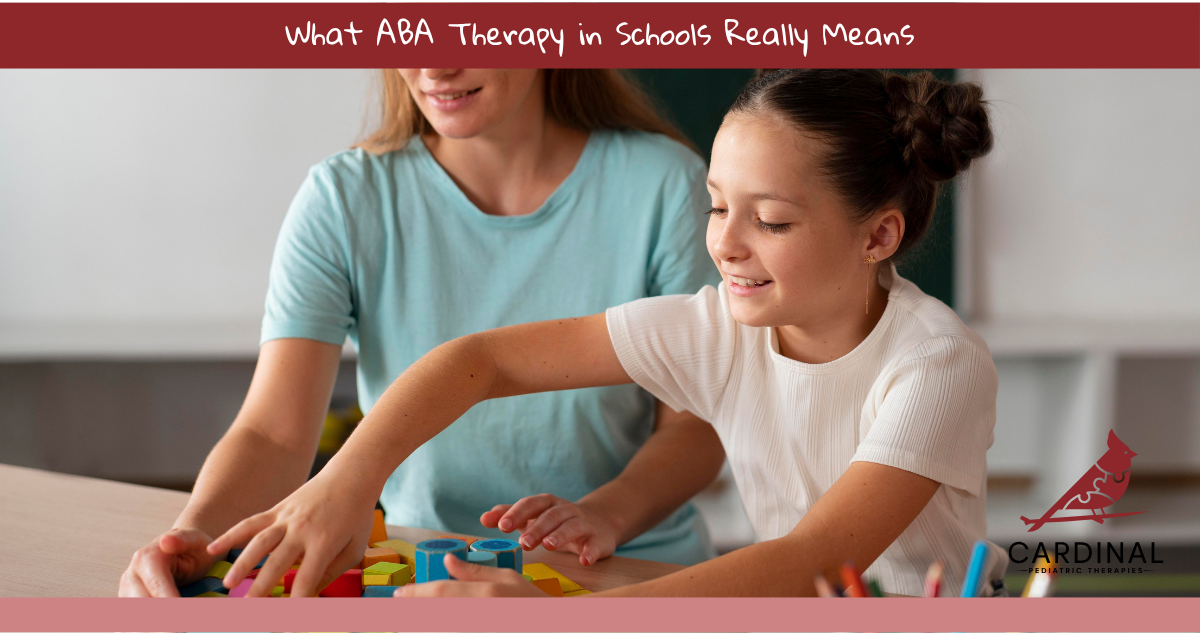
At its simplest, school-based ABA means a therapist works with your child in their actual classroom, in real time, as the school day happens.
How that plays out varies a lot by district. Some districts build a therapist into a child’s IEP as a related service under federal special education law. Others only allow limited coordination with an outside provider. And many families can’t get daily in-classroom support at all, even if they’d prefer it.
Our guide to ABA therapy in schools goes deeper into what this looks like in practice, including why Cardinal doesn’t place therapists in public school classrooms daily and what our clinic-based alternative offers instead.
This article stays focused on how school-based therapy compares with the other delivery options families are usually weighing.

Consider a family whose child does well with predictable routines but struggles with transitions, group activities, and following classroom-style instructions. The family may initially consider receiving ABA support in the child’s everyday school environment because practicing skills where challenges occur can help connect therapy to real-life routines.
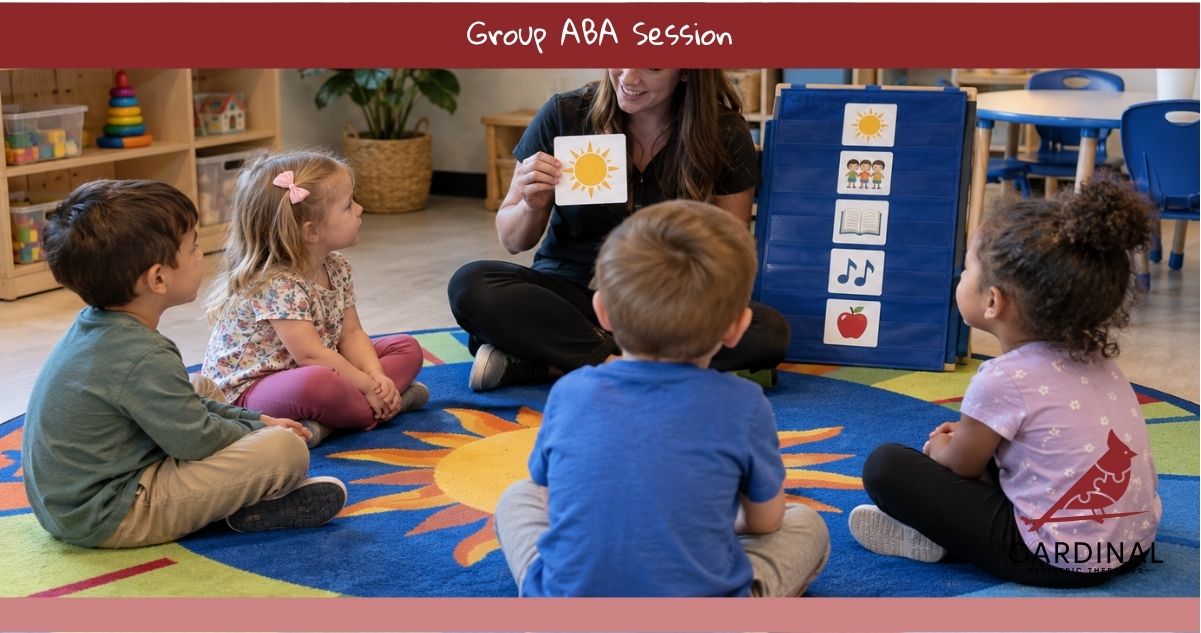
At the same time, they may consider center-based ABA because a structured clinic environment can reduce distractions while providing opportunities to practice communication, social interaction, self-regulation, transitions, and other school-readiness skills with professional support and peer interaction.
Ultimately, the delivery setting should reflect the individual child’s needs, preferences, goals, and the environments where support is most useful.
How School-Based Compares to Center-Based and In-Home ABA
Each delivery model is different on a few consistent factors:
- Peer interaction and generalization. School-based ABA has a natural advantage here; skills get practiced directly in the setting where a child ultimately needs to use them, alongside real peers. Center-based programs try to recreate that in a structured group setting; in-home therapy has the least built-in peer interaction.
- Consistency of oversight. A school-based therapist usually splits their time across several students and has to work around the teacher’s schedule. Center-based and in-home therapists don’t face that constraint, so their sessions tend to be more consistent and more individualized.
- Family involvement. In-home ABA involves parents the most, since sessions happen right in your family’s daily routine. With school-based or center-based ABA, you’re more likely to get progress reports and periodic check-ins than day-to-day coaching.
- Access and logistics. School-based access depends on your district’s policies and the IEP process, which is mostly outside your control. Center-based and in-home therapy are usually easier to arrange because you can set that up directly with your provider.
No model is better across the board. The right one depends on what your child needs most, and on what your district and insurance plan actually make available.
Why Many Families Prefer a Hybrid Approach
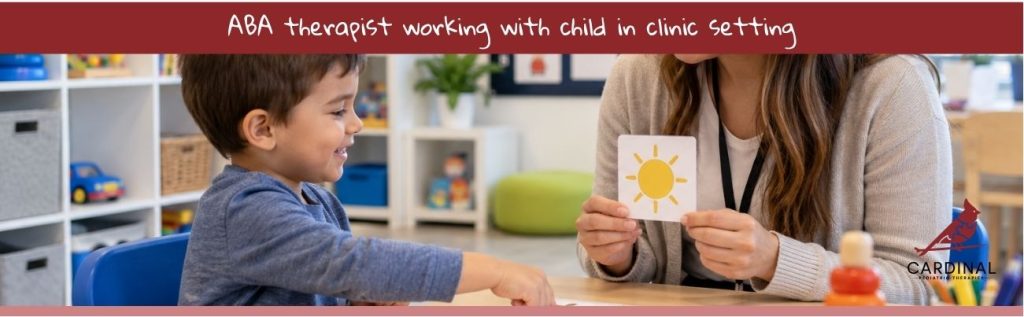
Most families don’t stick to just one model. An easier approach would be to start with clinic-based or in-home ABA to build core skills like communication, following instructions, and transitions.
When those skills are solid, you can coordinate with the school team to help them carry over into the classroom.
This is close to how Cardinal works. Our in-clinic ABA therapy program we build classroom-relevant skills in a structured setting. We share progress with families, and when it makes sense, we coordinate directly with your child’s school team rather than sending a therapist into the classroom.m
How to Decide Which Model Fits Your Child
Some questions tend to matter more than which model sounds best in the abstract:
- What does your district or insurance plan actually offer? This can narrow your real options.
- What is your child working on right now? Foundational skills like communication or following instructions are easier to build in a lower-distraction setting, before generalizing to a classroom.
- How involved do you want to be day to day? In-home ABA gives you the most built-in coaching. School-based and center-based therapy give you less by default.
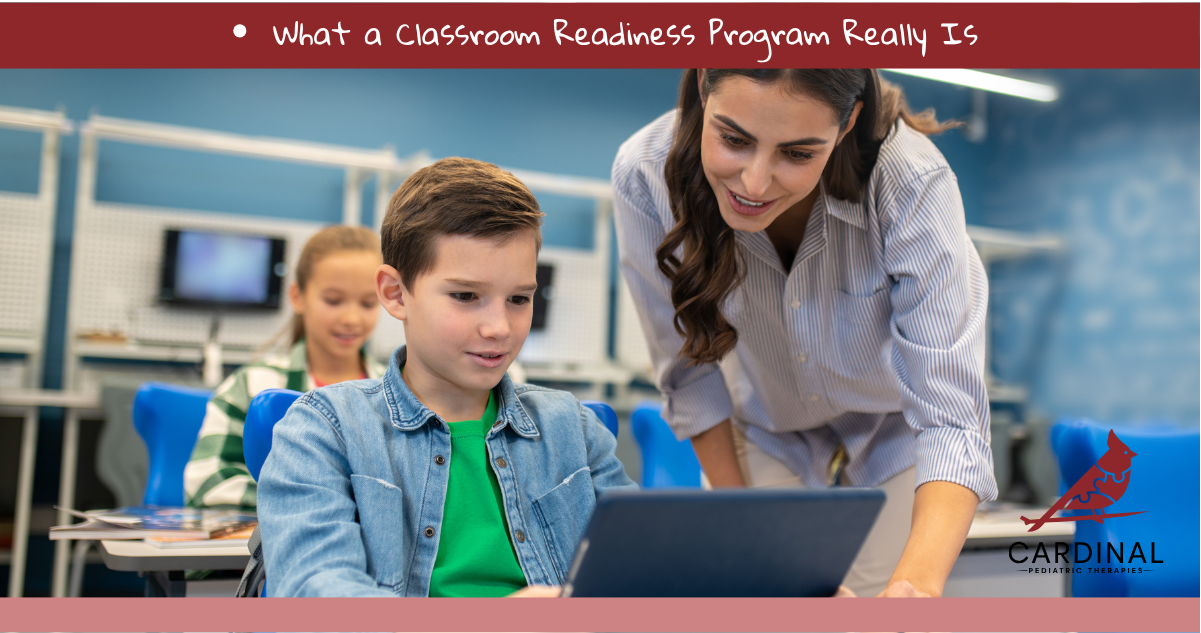
If classroom skills are the goal right now, our Classroom Readiness program is worth a look. No matter which long-term model you choose it’s built specifically to bridge therapy work into real classroom readiness.
Talk Through Which Model Makes Sense for Your Child
There’s no single right answer here. The best delivery model depends on your child’s goals, your district’s policies, and what your family can realistically keep up day to day. Cardinal Pediatric Therapies can walk you through how our clinic-based model compares to the school-based options in your district.
Contact our team to determine which approach best fits your child.