


One-on-one ABA services pair one trained therapist with one child for the whole session.
Sessions start with something fun to build trust, then move through the child’s schedule and their own goals: communication, social skills, daily living. It’s medically indicated therapy, with goals sent to insurance.
Whether it’s the right fit comes down to your child’s age and goals, and progress takes time.
For a lot of families, the ABA recommendation shows up in a stack of diagnosis paperwork. What it means for an ordinary weekday at home or at the clinic tends to get skipped. Families want to know who will be in the room, what their child will do, and whether it will help.
You’re in big company. Autism is common, and the CDC tracks how often it is identified in U.S. children.
Numbers don’t tell you what a session feels like, though. So we sat down with Alice Okamoto, a BCBA and Cardinal’s Chief of Staff. She’s spent more than six years helping families get started with ABA therapy services.
One-on-one ABA services mean one trained therapist works with one child for the whole session, following a plan written for that child and nobody else. At Cardinal, therapists hold certifications such as Registered Behavior Technician (RBT) and Board Certified Behavior Analyst (BCBA), and each child’s plan is written by their BCBA.
It sounds simple, and it mostly is. But “one-on-one” makes some parents picture a sitter watching their kid play. When we asked Alice what parents get wrong most, she didn’t hesitate: people think it’s babysitting. “We hear that a lot,” she said.
Here’s what’s actually going on in a session:
Babysitting doesn’t come with data sheets.
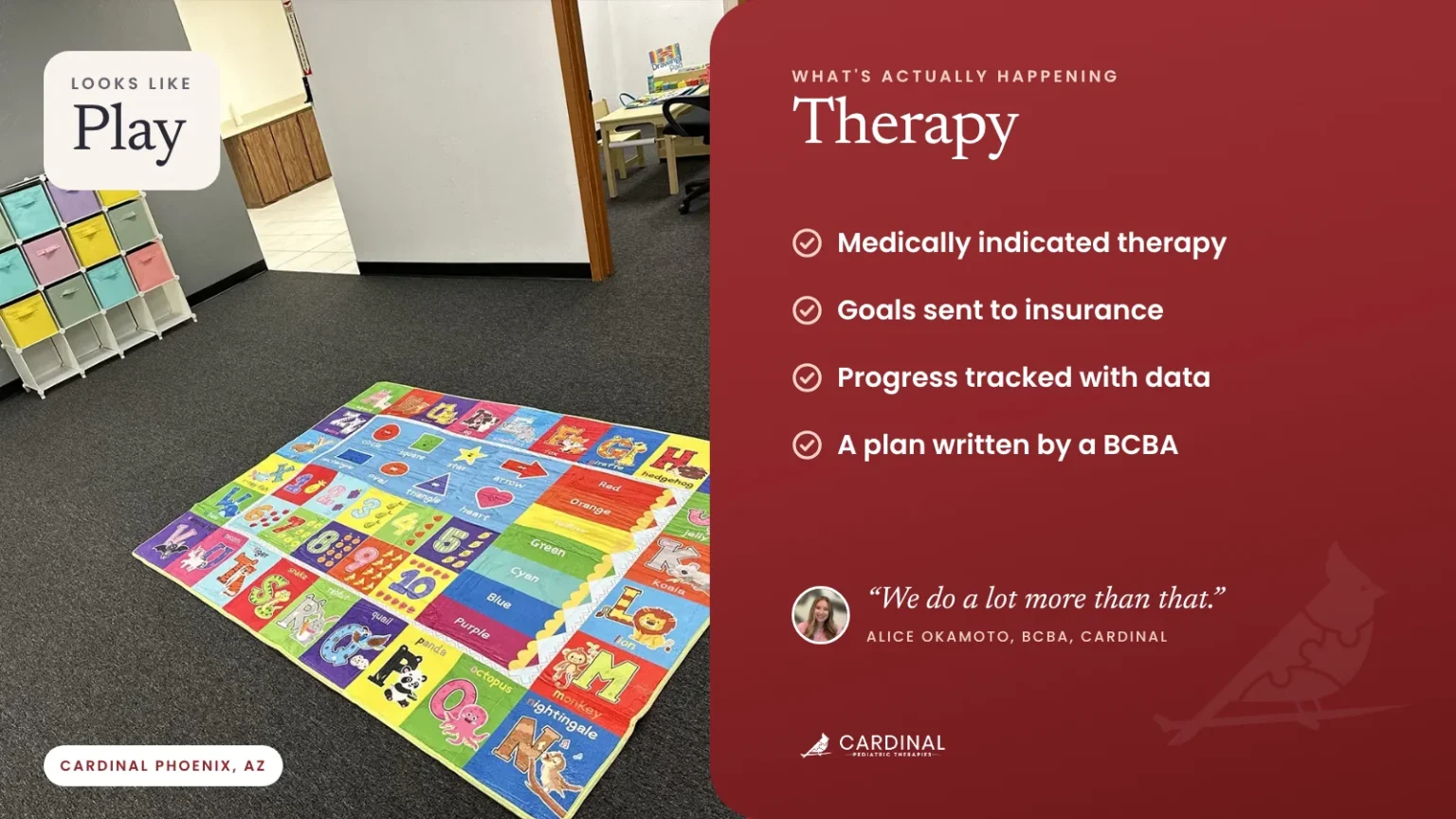
A one-on-one ABA session at Cardinal follows a predictable pattern: the same arrival routine, a fun warm-up called pairing, then focused time on your child’s goals. Kids do better when they know what’s coming, so the start stays the same every time. Then the day unfolds from there.
Alice explains why it starts with play.
In practice? Blocks, bubbles, whatever your child is into.
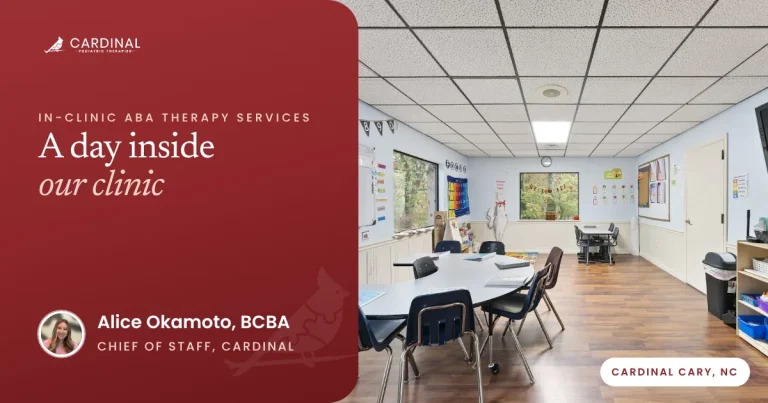
The setting matters some. In-clinic ABA therapy mixes group games and lunch with other kids into a typical clinic day. In-home ABA therapy works around whatever’s going on at your house, siblings and the dog included.
The basic routine doesn’t change.
| Step | What it looks like |
|---|---|
| 1. Arrival | Belongings away, same routine every time |
| 2. Pairing | A fun activity with the therapist to build trust |
| 3. The day's schedule | Group readiness work, snack, lunch, play and social time |
| 4. Individual goals | Focused time on the goals in your child's plan |
| 5. Consistency | Sessions look similar day to day, with room to adjust |
Children in one-on-one ABA build the skills they need most at home, at school and with friends, starting with communication. “We do so many things,” Alice told us. But communication comes first, and she says it carries into “really everything else too.”
A child who can ask for a break has an easier time with every other goal on the list, which is why building communication skills usually comes first. From there, sessions usually include:
No two programs match. Your child’s BCBA builds goals from an assessment of where your child is right now.
For kids heading toward school, Cardinal’s Classroom Readiness Program takes those same skills and practices them in a small group.
The biggest benefit of one-on-one ABA is trust. When one therapist works with your child session after session, your child learns that person is safe, and new skills get easier to try. We asked Alice for the biggest benefit, and her answer wasn’t about skills at all.
A child who has met someone twice acts differently around them than a child who knows that person well. One-on-one gives the therapist enough time with your child to get to the second stage, and a few things follow from that:
Curious what a session would look like for your child? Talk with our team, and we’ll walk you through it on a short call.
Not always. One-on-one ABA tends to fit younger children building their first skills, while some teens do better in a social skills group with one therapist and a few peers. The right format depends on your child’s age and goals, and a BCBA recommends it after an assessment.
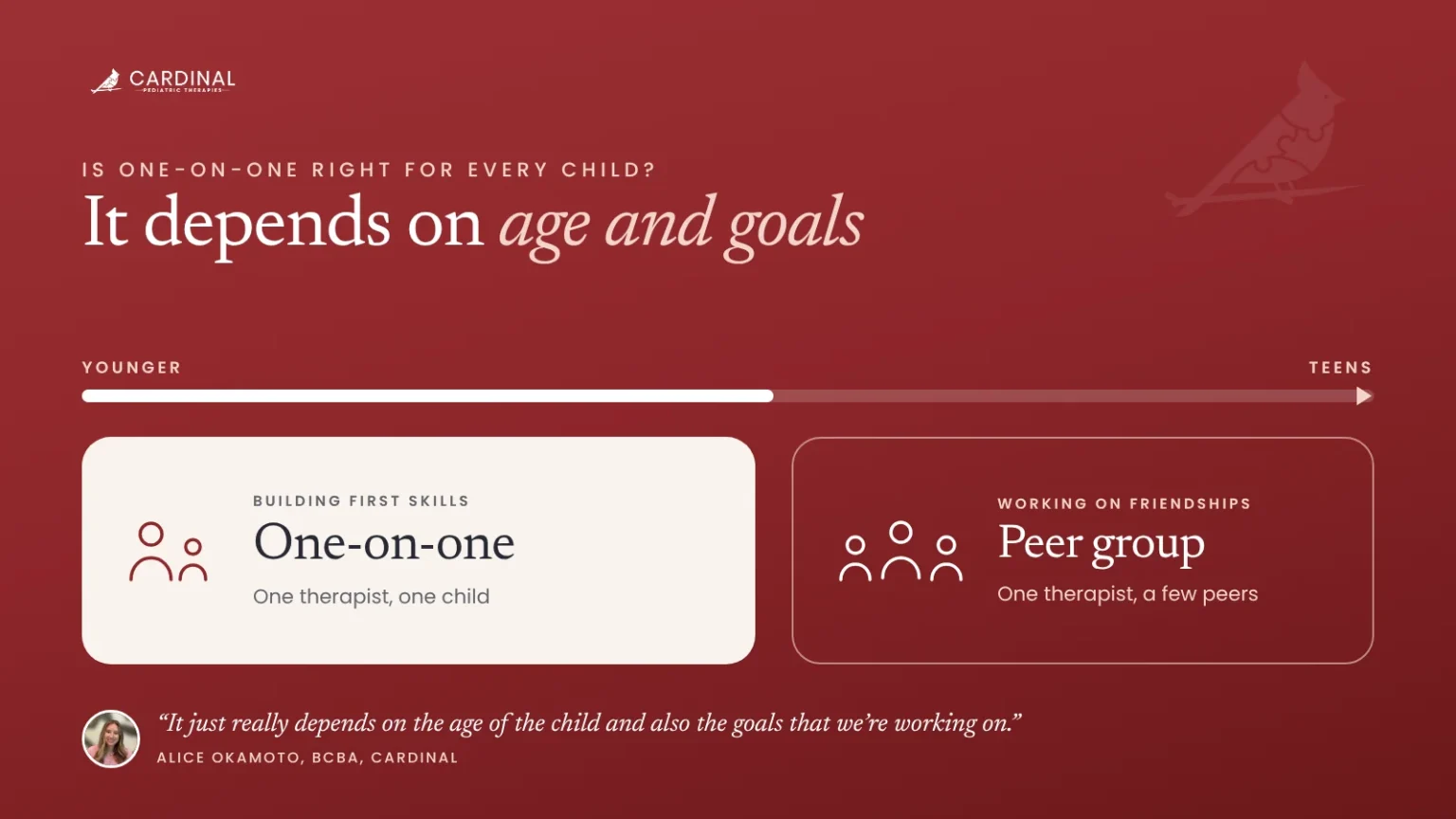
Alice is refreshingly direct about it. For younger kids, she says one-on-one is “very beneficial.” Teens working on friendships often get more out of practicing with peers, so the format shifts as a child grows.
That’s also why starting early matters, and a big reason families ask about the best age to start ABA. These are the milestones the CDC points to:
Hours depend on the child too. National guidelines split ABA into two rough types (CASP ABA Practice Guidelines, 2024), and the right number of hours of ABA therapy a week comes out of your child’s assessment.
| Program type | Typical weekly hours | Usually for |
|---|---|---|
| Focused ABA | About 10 to 25 hours | A few specific goals |
| Comprehensive ABA | About 30 to 40 hours | Goals across many skill areas |
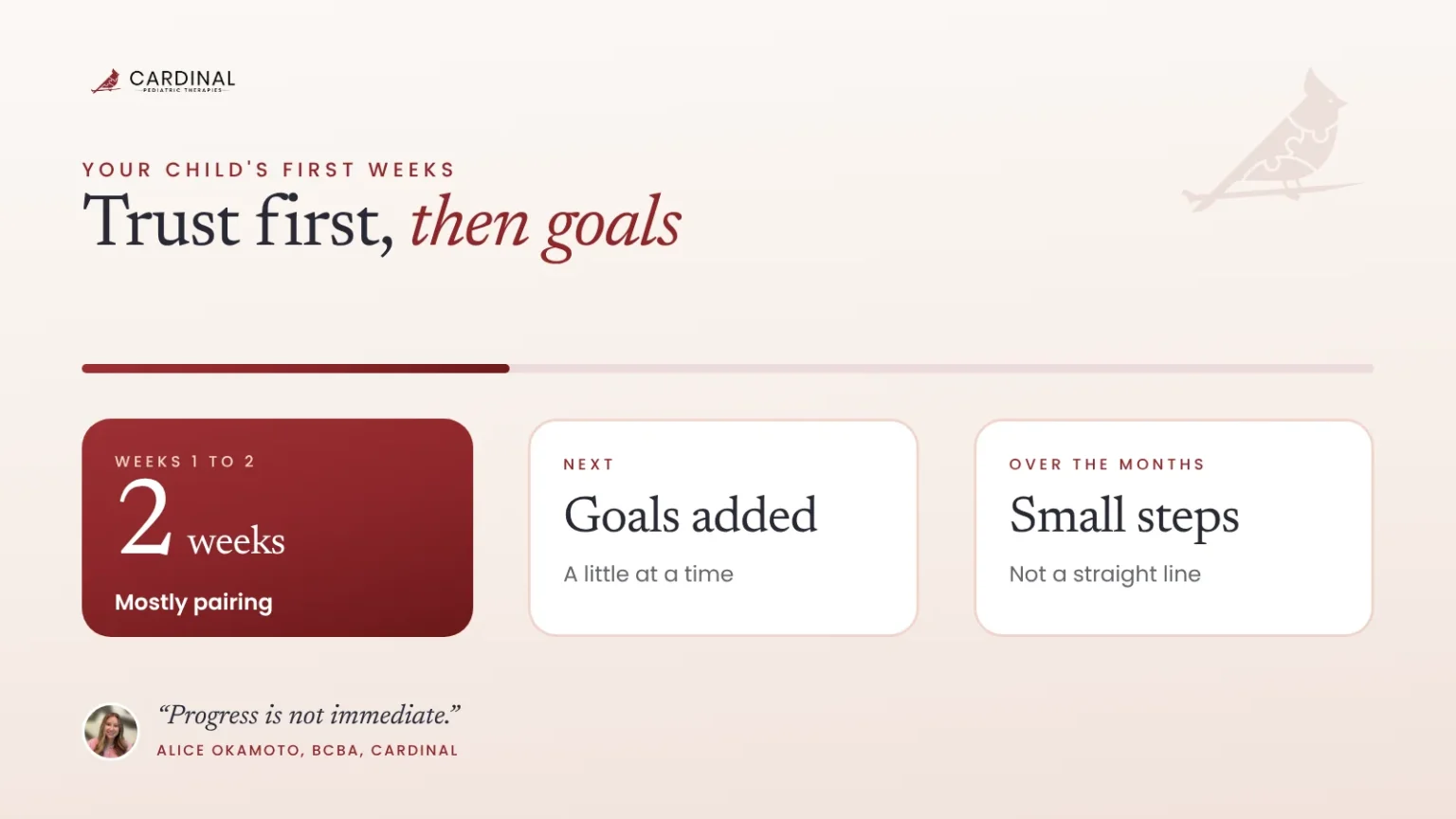
Before the first session, know that progress takes time. Most of the first two weeks go to pairing, so your child’s therapist is building trust through play before diving into program goals. Progress tends to come in small steps rather than a straight line, and that’s normal.
Cardinal focuses on rapport “for like two weeks before diving into some of the program goals,” Alice says. And her description of progress is the most honest one we’ve heard: “little nuggets here and there instead of very linear.”
So if the first two weeks look like a lot of play, that’s the point. The relationship comes first.
Cardinal offers one-on-one ABA therapy services in clinics, at home and in the community, and every child gets a BCBA guiding their plan plus a therapist who works with them directly, session after session. Where that happens is up to your family:
Our tagline is “Families first.” In practice that means if the schedule stops working for you, or a goal doesn’t line up with what matters at home, we change it.
Wondering whether one-on-one is right for your child? Call (919) 705-0668. No commitment, just a conversation.
A Board Certified Behavior Analyst (BCBA) does. The BCBA writes your child’s treatment plan, trains and supervises the therapist who runs each session, reviews the data, and updates goals as your child progresses. That supervision is what makes one-on-one ABA structured treatment rather than general childcare.
Pairing is how a therapist earns a child’s trust before teaching anything new, mostly through play the child already loves. It opens every session and carries the most weight early on, so your child sees the therapist as someone safe and fun before goal work begins.
It depends on your child. A BCBA recommends hours after an assessment, based on age, goals and setting. National practice guidelines put focused programs around 10 to 25 hours a week and comprehensive programs around 30 to 40, and hours can change as your child progresses.
Often, when it’s medically necessary, though coverage, copays and approved settings vary by plan. Cardinal can walk you through a quote of benefits before you start, so you know what your plan covers, how many hours are approved, and what you might owe.
At Cardinal, one-on-one ABA can happen in a clinic, at home or in the community. Clinics are in Cary, Clayton and Wilmington, North Carolina, and Phoenix, Arizona, with home and community sessions across North Carolina, Arizona and Texas. A BCBA helps your family choose the setting that fits your child’s goals.


Dr. Mike Henderson, Ph.D., BCBA-D, LBA
Regional Operations Director
North Carolina

Felicia Freeman
Clinic Manager
Amanda Dean, MA, BCBA, LBA
Johnston County, NC
Becky Fronheiser
Operations Director
Arizona

Matthew Wilkinson
Operations Director
Cary, NC
Matthew holds a bachelors degree from the University of Utah, Medical Degree from the Autonomous University of Guadalajara and an MBA from Western Governors University. He has worked in the pediatric field for the majority of his professional life and has a passion for helping bring the best care to children in need. He enjoys spending time with his wife and three children and day trips to the coast.

Trisha Iannotta Bieszczad, PsyD., BCBA
Triad, NC
Trisha is a Board Certified Behavior Analyst (BCBA) with extensive expertise since 2016 in applying behavior analytic principles to improve the lives of children and adolescents. Her professional journey began with a doctoral degree in clinical psychology, emphasizing child and adolescent development. This foundation has equipped her with a deep understanding of psychological theories and practices, which she seamlessly integrates into her work as a BCBA. Outside of her professional endeavors, Trisha enjoys reading, spending time outdoors with her family & trying out new restaurants. Trisha’s dedication to both her career and personal interests reflects her commitment to continual growth and enrichment, both professionally and personally. Her multifaceted background allows her to approach each aspect of her life with a blend of expertise, enthusiasm, and a genuine appreciation for learning and exploration.
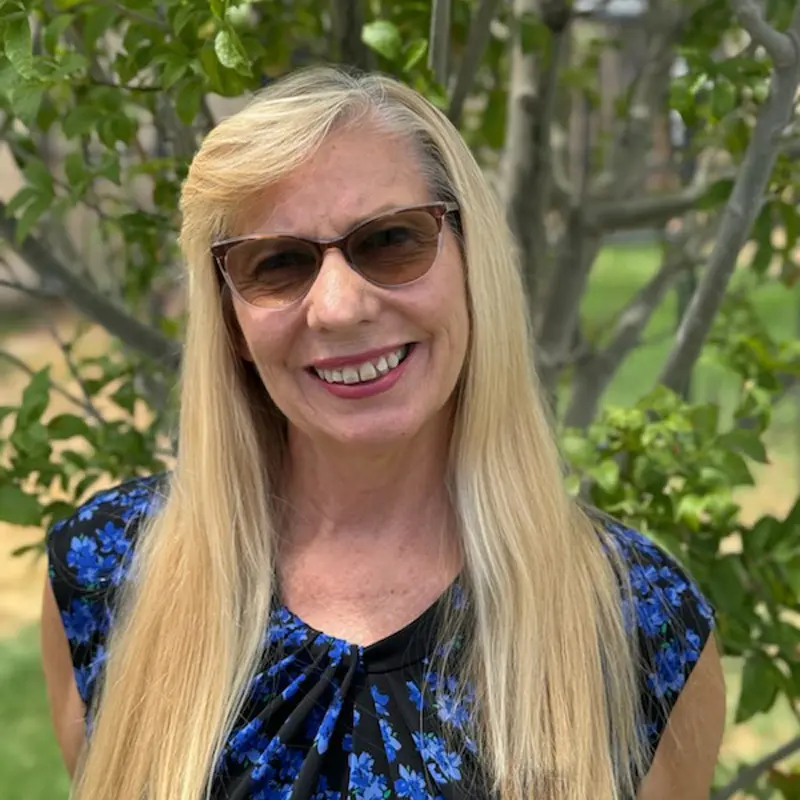
Tina Lee
Director of Finance

William Evans
Director of Outreach and Recruitment
William is a UNCW Graduate who started his professional career working in Marketing and Recruiting for a local technology company before looking for an opportunity to take those skills and help others. In his spare time he plays hockey, including annually for the North Carolina Autism Hockey Tournament, which is dedicated to the raising money and awareness for organizations helping local families with children diagnosed with autism.
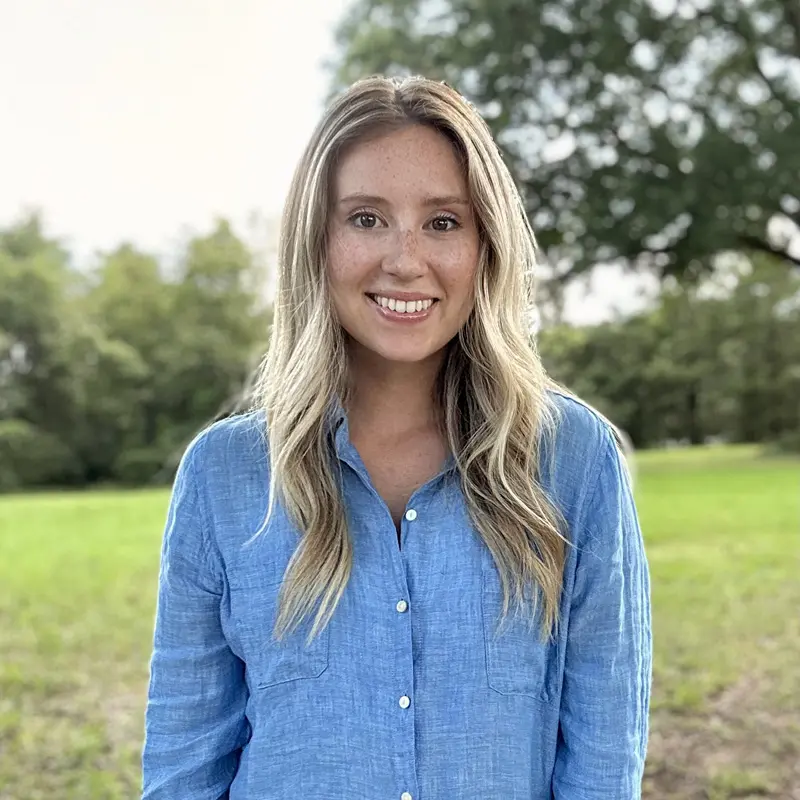
Alice Okamoto, MA, BCBA, LBA
Chief of Staff
Alice has been with Cardinal for over 4 years and has worn many hats along the way! Alice has a passion for working with clients and families as a unit, supervising behavior analyst trainees, and collaborating on strategic initiatives to ensure clinical efficiencies. Alice‘s professional experience began with ABA in a school setting, and has worked in schools, homes, and clinics throughout the years while enjoying collaboration with related providers. In her free time, Alice enjoys traveling, exploring parks with her dog, Oliver, and trying new restaurants.
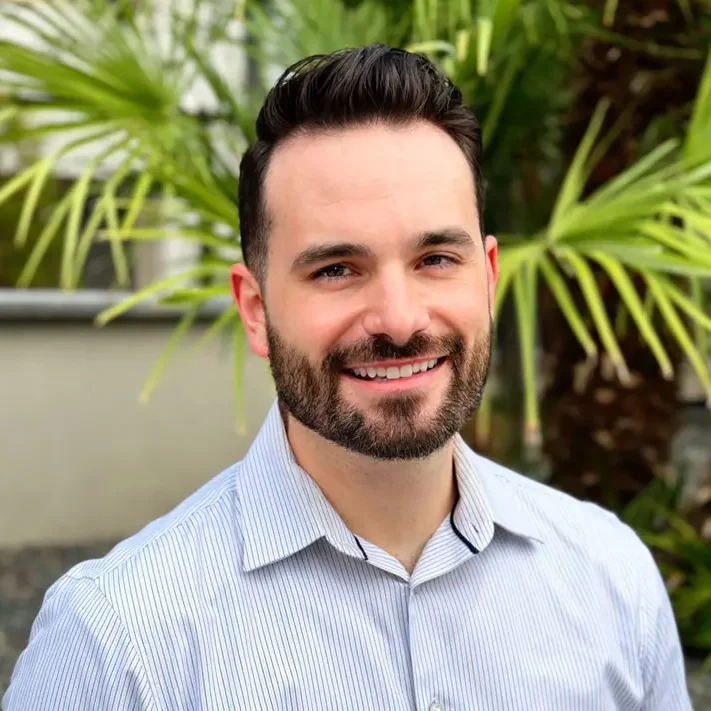
Darrin Miller
CEO
Darrin has dedicated his education and career to the field of behavioral health. As a licensed therapist and master’s in clinical counseling he works to create solutions that improve the lives of those impacted by Autism Spectrum Disorder at a local, state, and national level. He strives to create a culture of caring and empathy while innovating solutions for improving families’ access to quality care as quickly as possible.