
If your child’s individual ABA therapy is going well and someone has mentioned moving them into a classroom readiness program next, you’re probably wondering what that actually means in practice.
In this article, Alice Okamoto, MA, BCBA, LBA and Chief of Staff at Cardinal Pediatric Therapies, explains what a classroom readiness program really is, how it’s different from the one-on-one therapy your child may already be doing, what a child needs to be ready for it, and what “ready for school” actually means once you get past the buzzword.
How a Classroom Readiness Program Is Different from Individual ABA Therapy
Individual ABA therapy is one-on-one, built entirely around your child’s specific goals, at your child’s own pace. A classroom readiness program is a different setup entirely, and it’s built to look and feel like an actual classroom.
“It’s a group setting, up to ten kids, and it’s specifically built to mirror what a real classroom looks like,” Alice explains. “We’re not just teaching a skill in isolation anymore, we’re teaching a child to use that skill while sitting with peers, following a group instruction, waiting their turn.”
In other words, the skill itself isn’t new, it’s the environment around it that changes. For more on how skills like this get taught in a classroom setting more broadly, our article on applied behavior analysis in the classroom is a helpful companion read.
What a Session Actually Looks Like
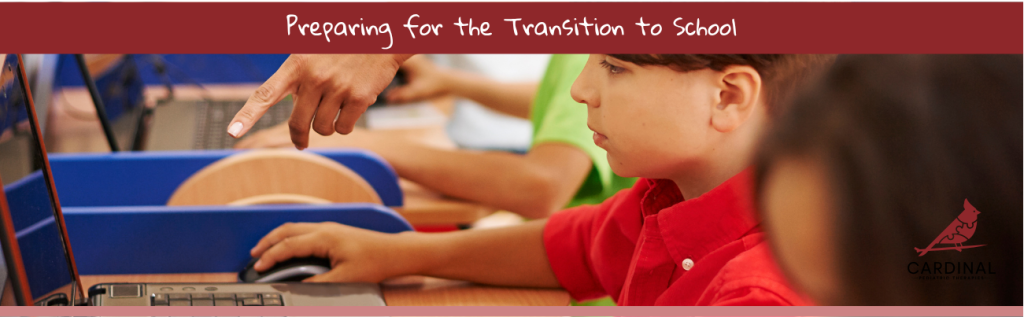
Sessions run nine to three, five days a week, in clinic, structured a lot like an actual school day on purpose: circle time, group instruction, transitions between activities.
Depending on where your child is at, they’ll be supported in one of a few ways:
| Level of support | What it looks like |
| Independent | Your child participates in the group on their own |
| RBT-supervised group | A Registered Behavior Technician oversees the group, stepping in as needed |
| One-on-one with an RBT | An RBT works directly alongside your child within the group setting |
“Depending on the outcome of ongoing assessment, we decide if a child can participate independently, with an RBT supervising the group, or one-on-one with an RBT right there,” Alice says.
Parents get a monthly report on how things are going, along with specific tips for reinforcing the same skills at home, many of which build on the same positive reinforcement techniques your child is already used to in individual sessions.
Not sure which level of support your child would need, or whether they’re close to ready? That’s exactly the kind of question a quick conversation can answer, no guesswork required. Reach out here and we’ll walk through it together.
What a Child Needs Before Joining
Not every child is ready for a group setting right away, and that’s normal, not a setback.
A few things we look for before recommending the classroom readiness program specifically:
- Effective, independent communication. Your child can get their wants and needs across without heavy support.
- Initiating play with peers. Independently, or with only minimal prompting.
- Following two to three step instructions. Group settings move fast, and this is what keeps a child following along.
- Limited unwanted behaviors. In a group of ten, safety and flow matter for everyone.
“If a child isn’t quite there yet, that’s not a no,” Alice says. “That just means individual or group ABA therapy is the right starting point first.” The program is a bridge, not a gate. Kids build toward it.
How Long Kids Typically Stay in the Program
There isn’t a fixed number we hand out, and honestly, a fixed number wouldn’t be honest.
Every plan takes into account your child’s individual and functional needs, their age, their specific goals, and the actual classroom setting they’re transitioning into.
Some kids move through the program faster because the remaining gaps are small. Others need more time, often around things like tolerating group expectations or handling transitions without one-on-one support. The transition itself is always the goal. The path to it just looks different for every child.
What “Ready for School” Actually Means
This is where most parents’ assumptions and reality split.
“I think the biggest one is thinking readiness is just about letters and numbers, academics,” Alice says. “It’s not, or at least that’s not the main thing.” A child can know their ABCs and still struggle badly in a classroom if they can’t handle a transition, wait their turn, or recover when something doesn’t go as planned.
Readiness, in practice, is really about:
- Functioning inside a group instead of one-on-one
- Following instructions the first time, without repeated prompting
- Communicating needs without escalating
- Recovering when something unexpected happens
Those are the things that actually determine whether the first weeks of school go smoothly, far more than whether a child can count to twenty.
Classroom Readiness at Cardinal Pediatric Therapies
Most parents who ask us about this have already heard the term “classroom readiness” somewhere and assumed it meant academic tutoring. It doesn’t. What we’re actually building is a child’s ability to function inside a group the way a classroom demands it, communication, transitions, following along, recovering from a hard moment, before they’re doing it in an actual kindergarten with thirty kids and no BCBA in the room.
Our classroom readiness program runs in clinic across our North Carolina locations in Cary, Clayton, and Wilmington, in groups of up to ten, with support that ranges from independent participation to one-on-one with an RBT depending on what a child needs right now.
It’s a private-pay program, not billed through insurance, and every plan is built around your child’s individual needs, age, and the classroom setting they’re heading into. If you’re earlier in the process and want general background on autism and early intervention, the CDC’s overview of autism spectrum disorder is a good place to start.
Ask a BCBA: Classroom Readiness Programs
What is the actual difference between a classroom readiness program and regular one-on-one ABA therapy?
“Individual ABA is one-on-one, built around a specific child’s goals at their own pace. The classroom readiness program is a group setting, up to ten kids, built to mirror an actual classroom. It’s less about teaching a brand new skill and more about teaching a child to use skills they already have, in a group.”
What does a typical group session actually look like?
“It runs a lot like a real school day: on purpose, circle time, group instruction, transitions between activities. Depending on the child, they might be in the group independently, with an RBT supervising, or one-on-one with an RBT. Parents get a monthly report either way.”
What skills does a child need before they can join a group like this?
“They need to be an effective, independent communicator, able to initiate play with peers on their own or close to it, follow two- to three-step instructions, and have limited unwanted behaviors. If a child isn’t quite there, that’s not a no; it just means individual or group therapy is the right next step first.”
What do parents get wrong about what it means to be ready for school?
“That it’s about academics. It’s really not, or it’s not the main thing. A child can know their letters and numbers and still struggle in a classroom if they can’t handle transitions or wait their turn. Readiness is functioning in a group, following instructions, communicating without escalating, and recovering when something goes sideways.”
Frequently Asked Questions
What age is a classroom readiness program best for?
The program is best suited for preschool-aged children, particularly those who need additional support before entering or re-entering a traditional classroom. Readiness is based on specific skills rather than age alone, so a BCBA evaluates each child individually before recommending the program.
Is a classroom readiness program covered by insurance?
No. Classroom readiness programs are typically private-pay and not billed through insurance, unlike individual ABA therapy sessions. Families should confirm current costs and payment options directly with the provider, since this can vary and isn’t something a general article can price accurately.
How is a classroom readiness program different from preschool?
A classroom readiness program is a clinical, BCBA-guided setting focused specifically on the behavioral and communication skills a classroom requires, with data tracked on each child’s progress. Preschool is the educational environment the program is designed to prepare a child for.
Does a child need a diagnosis to join a classroom readiness program?
Programs like this are typically designed for children already receiving ABA services, often with an autism diagnosis, since eligibility is based on skills developed through prior individual or group therapy. A BCBA can confirm whether a specific child qualifies.
What is the biggest misconception parents have about classroom readiness?
That it’s mainly about academics. As Alice explains it, a child can know their letters and numbers and still struggle in a classroom without the ability to handle transitions, wait their turn, or recover when something unexpected happens. That’s what readiness actually measures.