

When a child with autism is overwhelmed, the sensory techniques that help most are different from the general sensory activities used for everyday play.
Deep pressure a firm hug, a weighted blanket, or compression is one of the most consistently supported in-the-moment calming techniques, alongside slow rhythmic movement and reducing competing sensory input.
The right technique depends on the individual child’s sensory profile, and it works best when you identify and practice it before overwhelm, not when you try it for the first time during one.
How to Recognize Early Signs of Sensory Overload
If we catch overload early, it makes calming techniques more effective. A few common early signs to watch for:
- Covering their ears or eyes, even in response to sounds or lights that don’t seem loud or bright to an adult.
- Increased stimming, frequent or intense repetitive movements than usual.
- Pacing, fidgeting, or restlessness that wasn’t present a few minutes earlier.
- Withdrawal or going quiet, which can look like calm but is sometimes an early overload sign rather than the absence of one.
Every child’s early warning signs look a little different, so learning your own child’s specific pattern matters more than any general checklist.
We have noticed that one of the main overload signs that we can find is fidgeting and covering their ears. At this point, we at Cardinal recommend starting with any calming technique as soon as possible.

Deep Pressure and Proprioceptive Calming Techniques
Deep pressure is among the better-studied calming techniques for autism specifically. Research on deep pressure input has found it produces a calming effect on the autonomic nervous system, with one study reporting a measurable reduction in anxiety and arousal among children with autism.
A pilot study using a short-term deep-pressure portable seat found measurable improvements in behavioral ratings after repeated brief sessions.
Some easy ways to apply deep pressure in the moment:
- A firm hug or compression, if the child seeks and consents to physical touch; not every child does, and this should never be forced.
- A weighted blanket or lap pad, applied for a few minutes rather than left on indefinitely.
- Wall pushes or resistance activities, which provide proprioceptive input through the joints and muscles without requiring physical contact from another person.
- Tight swaddling or a compression vest, for children who specifically seek that kind of full-body pressure.
Movement-Based Calming Techniques
For children who respond better to movement, slow rhythmic input can be just as effective as deep pressure:
- Slow rocking, whether in a chair, on a lap, or using a rocking toy.
- Swinging at a steady, predictable pace, which combines movement with rhythm.
- Walking at a steady pace, ideally somewhere with reduced visual and auditory clutter.
The key word is steady; fast or unpredictable movement tends to add sensory input rather than calm it, which is the opposite of what’s needed during overload.
Building a Calming Toolkit Before You Need It
The techniques above work best if they’re familiar to a child before a meltdown happens. A few ways to prepare in advance:
- Identify go-to tools ahead of time. Our guide to sensory toys for autism covers specific product options organized by sensory type, useful for building out a toolkit before you need one.
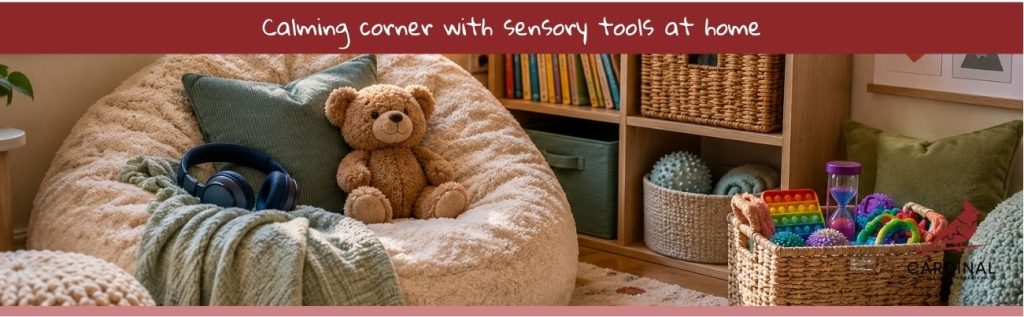
- Set up a dedicated calming space. A consistent, low-stimulation spot a child can retreat to makes a real difference. Our guide to home adaptations for autism covers how to set one up.
- Practice the technique during calm moments, not just during overload, so it’s already familiar when you need it.
From In-the-Moment Calming to a Taught Self-Regulation Skill
In-the-moment calming is something a caregiver largely does for or with a child. Over time, many of these same techniques become something a child learns to recognize and use.
Our guide to self-management techniques for children with autism covers how that transition from caregiver-led to child-led calming typically happens.
This same regulation work matters directly for school readiness, too: a child who can recognize early overload signs and use a calming technique independently is far better equipped for a classroom day than one who can’t. It’s one of the specific skills built into Cardinal’s Classroom Readiness program, which practices these techniques in a structured group setting that mirrors an actual school day.
Ready to Build a Calming Plan for Your Child?
Every child’s sensory profile is different, and figuring out which calming techniques actually work takes some trial and error, ideally guided by someone who can watch a child’s specific responses and adjust from there.
Cardinal Pediatric Therapies helps families identify calming strategies that fit their child specifically, both for in-the-moment use and as a foundation for classroom readiness.
Contact our team to talk through what a calming plan could look like for your child.